
Energy Efficient Outdoor Lighting Ideas for Backyards
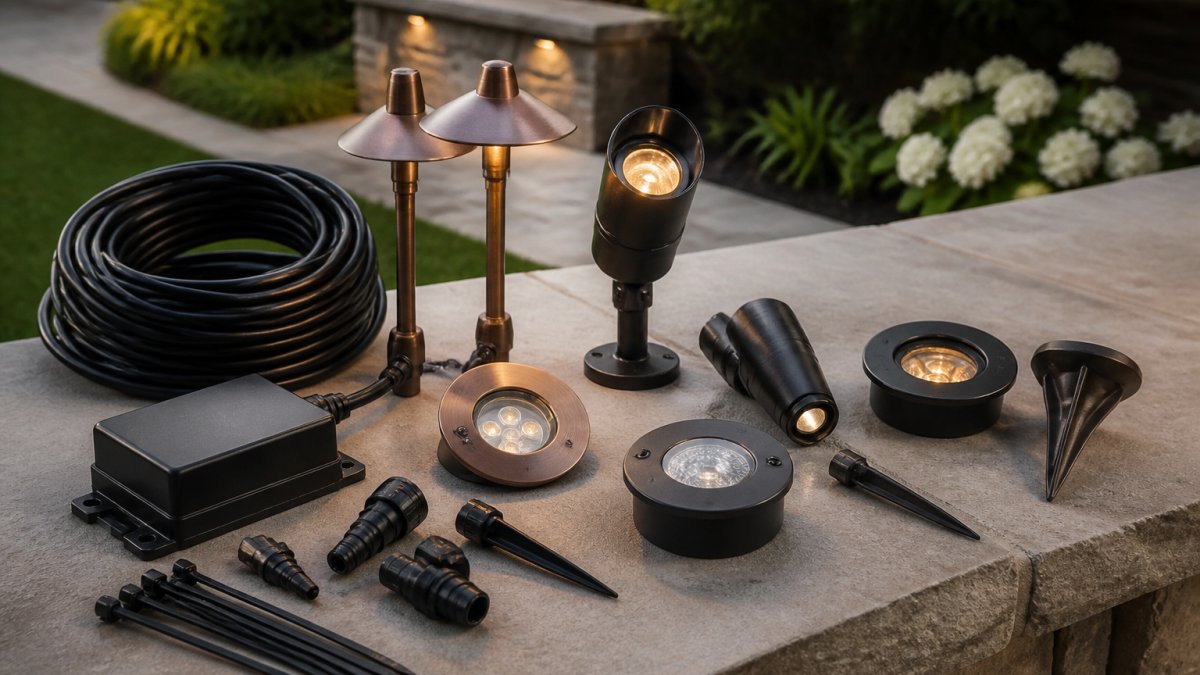
Table of Contents
- Why Energy Efficient Outdoor Lighting Matters for Your Backyard
- LED Outdoor Lighting Ideas That Cut Your Electric Bill
- Solar Backyard Lights: Zero Operating Costs
- Low-Voltage Landscape Lighting for Safety and Efficiency
- Outdoor Lighting Color Temperature: Choosing the Right Warmth
- Lighting Your Backyard by Zone: A Planning Approach
- Dark-Sky-Friendly Design and Light Pollution Control
- Installation, Controls, and Long-Term Performance
- Frequently Asked Questions
Last Updated: October 15, 2026
Why Energy Efficient Outdoor Lighting Matters for Your Backyard
Energy efficient outdoor lighting transforms how your backyard looks and feels after dark. It also cuts your electric bills significantly. At Paramount Outdoor Lighting Group, we help homeowners understand that the right outdoor lighting design does both at once: creates beautiful evenings and saves money month after month.
Most people think outdoor lighting is either expensive to run or cheap-looking. That's outdated thinking. Modern LED and solar options deliver stunning results without draining your wallet.
Here's what matters: your backyard lighting runs every evening, often for 8-10 hours. Small efficiency gains add up fast. A single 60-watt incandescent bulb costs roughly $8-12 per month to operate. Switch to LED and that same brightness costs under $1 per month. Over a year, one fixture saves $80-130. A fully lit backyard with 10-15 fixtures? The savings become serious money.
The best part: energy efficient outdoor lighting looks better, lasts longer, and gives you more control. You get instant on, no warm-up time, and colors that stay true all night. For homeowners serious about curb appeal and smart spending, this is the obvious choice.
LED Outdoor Lighting Ideas That Cut Your Electric Bill
LED bulbs are the foundation of energy efficient outdoor lighting. They use 75-80% less power than older incandescent or halogen bulbs while delivering brighter, more consistent light.
Why LED dominates for backyards:
- Runs cool to the touch (no heat waste)
- Lasts 25,000-50,000 hours (that's 10-15 years of nightly use)
- Available in warm white (2700K) through cool white (5000K)
- Dimmable options let you set the mood
- No flickering or maintenance headaches
Consider these LED fixture types for common backyard needs:
Deck and step lights. These low-profile LED fixtures mount flush on deck boards or stairs. They provide safe footing without glare. Most draw 1-2 watts each. Install them along walkways and around seating areas.
Wall-mounted sconces. LED sconces flank doors and patios. They cast light down and out without harsh shadows. Typical power draw: 8-15 watts. Choose warm white for inviting ambiance.
Pendant lights over seating. Hang LED pendants above dining tables or lounge areas. They mimic indoor lighting and create focal points. These typically use 15-25 watts and deliver excellent color rendering.
Uplighting for trees and plants. Position LED spotlights at ground level pointing upward. This accent lighting technique highlights landscape features with minimal power use (10-20 watts per fixture). It transforms a plain yard into a layered, professional-looking space.
The key: LED fixtures cost more upfront than older options, but the electricity savings and lifespan make them cheaper over time. Most LED outdoor fixtures pay for themselves within 2-3 years of use.
Solar Backyard Lights: Zero Operating Costs
Solar-powered outdoor lighting removes the operating cost entirely. These fixtures charge during the day and illuminate at night with stored energy.
How solar lights work:
- Built-in photocell detects sunset
- Light turns on automatically
- Battery discharges through the night
- Cycle repeats the next day
Best uses for solar fixtures:
Pathway and garden lights. Solar stake lights line walkways, driveways, and garden beds. They cast soft ground-level light that guides feet safely. No wiring needed. Push them into soil and they're done.
Solar string lights. These hang between posts or trees. They create bistro-style ambiance without electrical connections. Run time per charge ranges from 6-12 hours depending on battery capacity and sun exposure that day.
Solar lanterns. Freestanding or hanging solar lanterns sit on tables, patios, or shelves. They're portable and require zero installation. Ideal for renters or anyone wanting flexibility.
Floating pool lights. If you have a water feature, solar floats add shimmer and safety. They drift on the surface and charge during daylight.
Trade-offs with solar: Brightness depends on battery size and daily sun exposure. Cloudy regions or shaded yards may see reduced performance. Solar lights work best in open, sunny locations.
For maximum reliability, pair solar fixtures with LED technology. Solar LED combinations deliver the lowest operating cost with reasonable brightness.
Low-Voltage Landscape Lighting for Safety and Efficiency
Low-voltage landscape lighting operates at 12 volts instead of standard 120-volt household current. This approach dramatically reduces power consumption while improving safety during installation and use.
Why low-voltage matters:
- Uses 80% less energy than line-voltage systems
- Safe to touch (no shock hazard)
- Easier DIY installation (no electrician required)
- Flexible wire runs along ground or through planting beds
- Transformer steps down household current automatically
Common low-voltage fixture types:
Uplights and spotlights. Position these at ground level to highlight trees, shrubs, or architectural features. They create dramatic shadows and depth. Typical draw: 5-12 watts per fixture.
Path lights. Low-voltage path lights cast gentle light along walkways. They're subtle and professional-looking. Most use 3-7 watts.
In-ground well lights. Recessed into patios or decking, these wash light across surfaces. They integrate seamlessly into hardscaping.
Accent wash lights. These spread light across building facades, fences, or garden walls. They define space without glare.
Installation insight: Low-voltage systems require a transformer (usually 300-600 watts total capacity) that plugs into a standard outdoor outlet. Run wiring from the transformer to each fixture. Many homeowners handle this themselves, though professional installation ensures proper spacing, voltage drop calculations, and weatherproofing.
The safety advantage matters: low-voltage wiring can be buried shallowly or run above ground. If damaged, there's no shock risk. This makes low-voltage landscape lighting ideal for properties with children or pets.
Outdoor Lighting Color Temperature: Choosing the Right Warmth
Color temperature affects mood, visibility, and perceived space size. It's measured in Kelvin (K). Understanding this one factor transforms your backyard from ordinary to intentional.
Color temperature ranges:
Warm white (2700K). This mimics incandescent light. It feels cozy and inviting. Use it for seating areas, dining spaces, and patios where you want relaxation. Warm white makes spaces feel smaller and more intimate.
Neutral white (3000-4000K). This sits between warm and cool. It's balanced and versatile. It works for both task lighting (grilling, food prep) and ambiance. Many homeowners choose this for multipurpose backyards.
Cool white (5000K and up). This resembles daylight. It's bright and energizing. Use it for security lighting, workspace areas, or modern architectural highlighting. Cool white makes spaces feel larger and more open.
Practical guidance: Pick one temperature for ambient lighting (the overall mood) and stick with it. Mixing warm and cool lights creates visual confusion.
For energy efficient outdoor lighting, LED bulbs give you precise color control. You can buy fixtures in specific Kelvin ratings. Some advanced LED systems even let you adjust color temperature with a remote or app.
Lighting Your Backyard by Zone: A Planning Approach
Most backyards serve multiple purposes: dining, relaxation, movement, and recreation. Each zone benefits from different lighting strategies. Planning by zone ensures you light what matters and skip what doesn't.
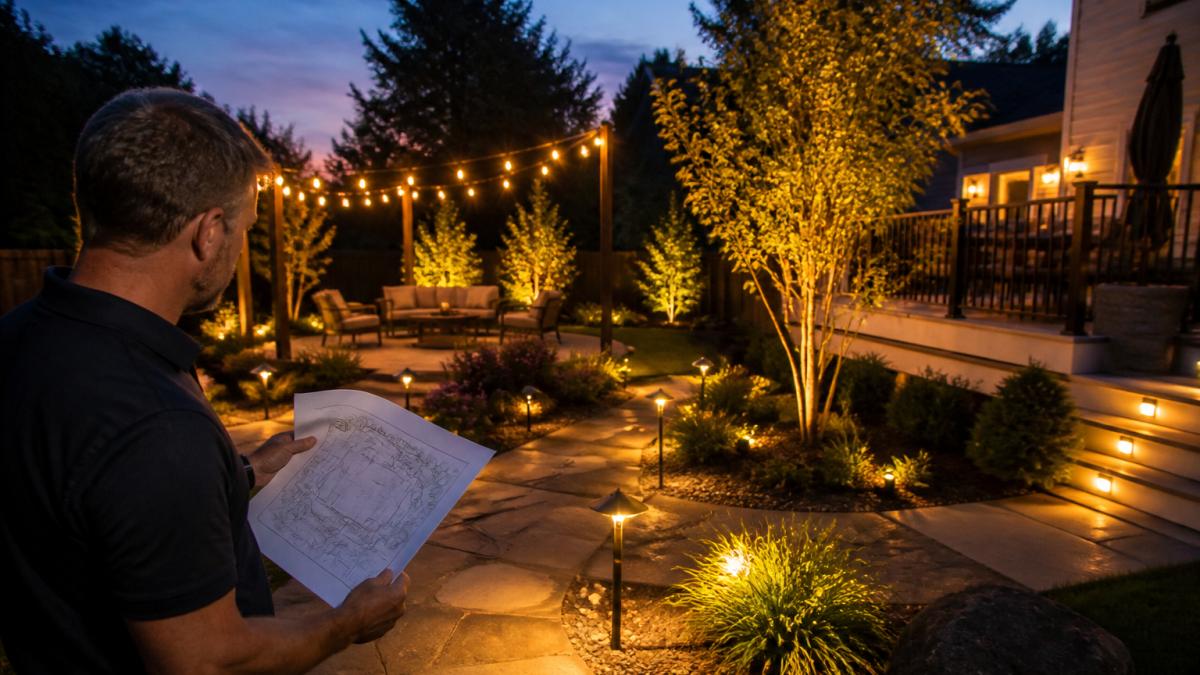
Define your zones:
Seating and entertaining areas. These need ambient light that's bright enough to see faces and food but warm enough to feel relaxed. String lights, pendant lights, and wall sconces work well here.
Pathways and walkways. These need task lighting for safety. Low-level path lights or uplighting on nearby plants guide feet.
Accent zones (trees, plants, architectural features). These showcase your landscape. Use uplighting or spotlighting to create drama. One 10-20 watt spotlight can transform a tree into a focal point.
Work zones (grilling, food prep, bar areas). These need functional light. Pendant lights, recessed deck lights, or wall-mounted fixtures at 150-200 lumens per square foot keep tasks visible and safe.
Recreation areas (fire pit, lounge seating). These blend ambiance with subtle task lighting. Dimmable fixtures give flexibility. As evening deepens, lower the light level to preserve comfort.
Practical planning steps:
- Walk your backyard at dusk and note dark spots
- Identify where people gather and move
- Decide which features deserve highlighting
- Choose fixture types that match each zone's purpose
- Plan wiring routes (low-voltage systems make this easier)
- Calculate total wattage to ensure your power source handles the load
This zone-based approach prevents over-lighting (wasting energy on areas nobody uses) and under-lighting (dark corners that feel unsafe or unwelcoming). It's the difference between random fixture placement and intentional design.
Dark-Sky-Friendly Design and Light Pollution Control
Light pollution wastes energy and disrupts ecosystems. Dark-sky-friendly outdoor lighting design reduces unnecessary upward light while still illuminating your space beautifully.
Principles of dark-sky design:
Shield lights downward. Use fixtures with hoods or diffusers that direct light down, not up or sideways.
Limit brightness. Brighter isn't always better. A 10-watt LED path light is plenty for safety. A 20-watt uplighter is enough to showcase a tree. Oversized fixtures waste energy and create glare.
Avoid uplighting the sky. Uplighting trees and buildings is beautiful, but pointing light straight up at the sky serves no purpose. Angle fixtures so light falls on the subject, not beyond it.
Use warm color temperatures. Warm white (2700K) light scatters less in the atmosphere than cool white. It also feels more comfortable for evening entertaining.
Install motion sensors. For security or pathway lighting, motion sensors turn lights on only when needed. This cuts operating time dramatically while maintaining safety.
Turn off lights when not in use. Timers and smart controls let you automate this.
Dark-sky design isn't about sacrificing beauty. It's about using light intentionally. Professional lighting designers apply these principles to create stunning backyards that also respect the environment and save energy.
Installation, Controls, and Long-Term Performance
Installation essentials:
Wiring and weatherproofing. Outdoor wiring must be rated for wet environments (UF cable for buried lines, GFCI-protected outlets for above-ground).
Voltage drop planning. In low-voltage systems, long wire runs lose voltage as current travels.
Secure mounting. Fixtures must be firmly mounted so they don't shift or loosen.
Professional installation matters. While low-voltage systems are DIY-friendly, mistakes happen. Improper grounding, undersized transformers, and poor wire routing cause problems.
Smart controls add convenience and savings:
Timers. Basic plug-in timers turn lights on and off at set times. They're simple and reliable.
Dimmers. Dimmable LED fixtures let you adjust brightness. Lower light levels reduce power draw and extend fixture life.
Motion sensors. These trigger lights only when movement is detected. Perfect for security or pathway lighting in low-traffic areas.
Smart home integration. Advanced systems connect to apps or voice assistants.
Long-term performance tips:
- Clean fixtures annually to remove dust and debris
- Check weatherproofing on connections every 2-3 years
- Replace batteries in solar lights every 3-5 years
- Inspect wiring for damage after storms
- Test motion sensors and timers seasonally
LED fixtures rarely need maintenance beyond cleaning. They don't burn out like older bulbs.
Energy efficient outdoor lighting is one of the smartest investments you can make in your home.
Paramount Outdoor Lighting Group specializes in designing and installing custom energy efficient outdoor lighting systems tailored to your property.
Frequently Asked Questions
What is the most energy-efficient outdoor lighting option?
LED fixtures are the most energy-efficient choice, using 75-80% less electricity than incandescent bulbs while lasting 25,000+ hours. Solar-powered lights eliminate operating costs entirely by using free sunlight, though they're best for accent and pathway lighting. Low-voltage systems (12V) also reduce energy draw compared to standard 120V fixtures. The best option depends on your specific application: LEDs for permanent fixtures you use year-round, solar for decorative pathway and accent lights, and low-voltage for landscape highlighting.
Are LED or solar lights better for a backyard?
Both excel in different situations. LED fixtures provide reliable, consistent brightness for task lighting, entertaining spaces, and year-round use, they work in any season and any weather. Solar lights cost nothing to operate and work well for pathway accent lighting and subtle garden illumination, but they depend on sunlight and may dim on cloudy days or in shaded areas. Many homeowners use both: solar for decorative pathways and LEDs for seating areas and task lighting where dependable brightness matters most.
What color temperature is best for outdoor lights?
Warm white (2700K-3000K) creates an inviting, relaxing atmosphere perfect for patios and entertaining areas. Cool white (4000K-5000K) works better for security, task lighting, and areas where you need clear visibility. For landscape and accent lighting, warm tones highlight plants and architectural features naturally. A mix of color temperatures across your backyard, warm overhead lights for seating, cooler pathway lights for safety, balances ambiance with function. Avoid mixing warm and cool in the same sightline, as it can feel jarring.
How can I reduce light pollution from outdoor lighting?
Use fixtures with shields or hoods that direct light downward rather than scattering it upward. Choose warm color temperatures (2700K or lower), which scatter less into the night sky. Install motion sensors or timers so lights run only when needed. Avoid overlighting, use the minimum brightness required for your task. Position lights low to the ground for pathway and accent lighting. These practices protect the night sky while creating a more intimate, pleasant outdoor environment for your property and your neighbors.