
Outdoor Lighting Warranty: 7 Things to Check
Table of Contents
- Why Most Outdoor Lighting Warranties Fail Homeowners
- What Should Be Covered in an Outdoor Lighting Warranty
- The 'Pro-Rated' Trap: Why a 10-Year Warranty Isn't 10 Years
- Common Exclusions That Void Your Coverage
- Understanding Low Voltage Landscape Lighting Lifespan
- Outdoor Lighting Maintenance Tips to Keep Coverage Valid
- Outdoor Lighting Installation Service Guarantees: DIY vs. Pro
- Your Warranty Documentation Checklist Before You Buy
- Frequently Asked Questions
Last Updated: September 7, 2026
An outdoor lighting warranty is only as good as the fine print you never read. Most homeowners assume a 10-year warranty means a decade of free repairs, but labor exclusions, pro-rated formulas, and environmental loopholes often leave you paying out of pocket. This guide breaks down what to look for in an outdoor lighting warranty so you can avoid the common traps that turn a "guarantee" into a worthless piece of paper.
Why Most Outdoor Lighting Warranties Fail Homeowners
The most common failure isn't a faulty fixture; it's a mismatch between what you expect and what the warranty actually promises. A typical outdoor lighting warranty covers replacement parts, but the labor to install them is often excluded, leaving you with a surprise bill that can exceed the cost of the part (the FTC).
What Should Be Covered in an Outdoor Lighting Warranty
A comprehensive outdoor lighting warranty should explicitly cover manufacturing defects and workmanship issues in the fixture housing, the LED driver, and the transformer, the core electrical components that determine system reliability.
Look for language that covers the full system, not just individual parts. Some warranties cover the fixture but exclude the transformer or low-voltage cable, which are often the most expensive components to replace.
Parts vs. Labor: The Hidden Cost Difference
A parts-only warranty will ship you a replacement fixture, but you'll pay an electrician to install it, which can cost more than the fixture itself.
When comparing options, always ask: "Does this warranty cover the cost of labor for replacement, or just the part?" This distinction is one of the most critical things to look for in an outdoor lighting warranty.
The 'Pro-Rated' Trap: Why a 10-Year Warranty Isn't 10 Years
A "10-year warranty" often means 10 years of pro-rated coverage, not full replacement value. In a pro-rated warranty, the manufacturer deducts a percentage based on how long you've owned the fixture, so a failure in year eight might only entitle you to a 20% discount (consumer.ftc.gov).
Ask for the warranty's "pro-ration schedule" in writing. A non-pro-rated warranty, often called a "full replacement warranty," is far more valuable and signals manufacturer confidence.
Common Exclusions That Void Your Coverage
Warranty exclusions are often broader than you'd expect. The most common reason for a denied claim is environmental damage, corrosion, water ingress, lightning, or power surges. Many warranties explicitly exclude damage from "acts of God" or "improper operating conditions."
Another frequent exclusion is failure caused by modifications or repairs by an unapproved third party. If a handyman wires a fixture incorrectly and it fails, the warranty is void.
The Fine Print of Environmental Claims: What Insurers Actually Check
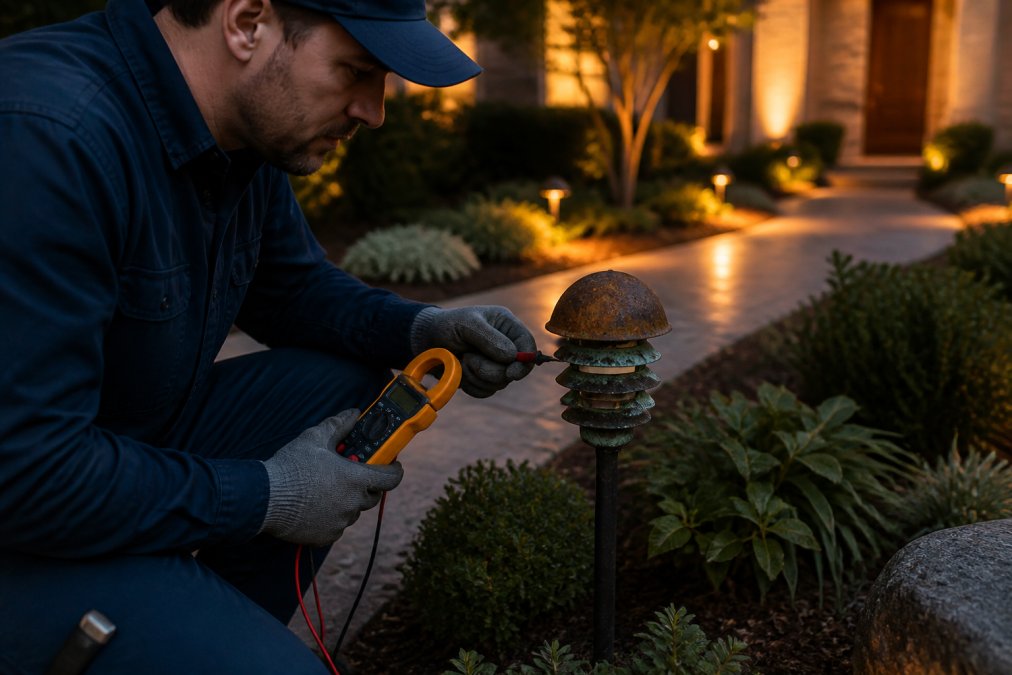
When you file a claim, the manufacturer typically sends an adjuster or requires you to ship the failed component to their lab, which looks for three specific things:
-
Corrosion patterns: They check for telltale green or white oxidation on the copper wiring and brass connectors. If they find corrosion that isn't uniform, say, concentrated on one terminal, they'll likely conclude that water entered through a compromised seal, which they'll attribute to improper installation or physical damage.
-
Burn marks on the LED driver: A charred or discolored driver is almost always attributed to a power surge. Unless you can prove the surge came from the grid (not your home's wiring), the manufacturer will deny the claim under their "electrical disturbance" exclusion.
-
Gasket condition: The rubber gaskets that seal the fixture housing are the first line of defense against moisture. If the gasket is cracked, brittle, or missing, the manufacturer will claim the fixture was opened or mishandled, voiding coverage.
The UL 8750 Standard: Your Hidden Leverage
Virtually every LED outdoor lighting fixture sold in the United States is tested to UL 8750, the safety standard for LED equipment, which requires fixtures to withstand specific temperature and humidity ranges (ul.com). If your fixture fails under those parameters, you have a strong case to dispute a denial.
Before accepting a denial, ask for the specific test report for your fixture model. If they can't produce one, or the failure matches a certified condition, escalate to customer relations or file a complaint with your state's attorney general.
The "Salt Air" Loophole and the IP Rating Reality
The ingress protection (IP) rating tells you how well a fixture resists dust and water, but not chemical corrosion. A fixture rated IP65 can still fail within two years in a coastal environment if the housing is powder-coated aluminum rather than marine-grade stainless steel or solid brass.
Most standard warranties contain a quiet exclusion for "damage caused by atmospheric conditions," which is industry code for salt spray, acid rain, and industrial pollutants. If you live within 10 miles of a coastline, ask: "Does this warranty cover corrosion from salt air?" If the answer isn't a written "yes," assume the fixture won't survive its full rated lifespan.
How to Dispute a Denied Claim: A Step-by-Step Path
If your claim is denied, you are not without recourse:
-
Request the denial in writing. Verbal denials are not binding. Ask for the specific exclusion clause they are citing.
-
Ask for the lab report. If the denial is based on a physical inspection, request the full inspection report, including photos. Manufacturers are not required to provide this, but many will if you push.
-
Check the Magnuson-Moss Warranty Act. This federal law prohibits manufacturers from using "tie-in" provisions that require you to use specific brands or services to keep your warranty valid, unless they provide the service for free or obtain a waiver from the FTC. If your claim was denied because you didn't use a manufacturer-authorized installer, this law may be your strongest argument.
-
File a complaint with the BBB and your state AG. A formal complaint often triggers a review by the manufacturer's legal department, which may approve the claim simply to avoid the administrative cost of responding.
-
Consider small claims court. If the replacement part costs more than your state's small claims limit (typically $5,000 to $10,000), filing a claim is often more cost-effective than hiring an attorney. The threat of a judgment on their record frequently motivates manufacturers to settle.
The Documentation That Wins Claims
When you file a claim, the manufacturer will ask for three things. Having these ready before you call can be the difference between a 15-minute approval and a month-long dispute:
- Proof of purchase: The original receipt with the date, model number, and purchase price. A credit card statement alone is often insufficient.
- Installation photos: Clear photos of the fixture installed, showing the wiring connections and the transformer. This proves the installation wasn't obviously defective.
- Date-stamped maintenance records: A simple log of when you cleaned the fixtures and inspected the system. This counters the "neglect" exclusion.
Keep these in a cloud folder or a physical file labeled "Lighting Warranty." You will not remember where you put the receipt three years from now when the driver fails.
Understanding Low Voltage Landscape Lighting Lifespan
The expected low voltage landscape lighting lifespan is a key factor in evaluating a warranty's worth. Quality LED fixtures last many years, but their lifespan is heavily influenced by the transformer and power supply stability, voltage fluctuations are a leading cause of premature LED failure.
The best warranties cover the entire system for the full stated lifespan.
The Real Failure Timeline: What Actually Breaks and When
Most manufacturers quote LED lifespans of 25,000 to 50,000 hours, roughly 10 to 20 years of typical evening use. But that number refers to the LED chip, not the complete fixture. Components fail in a predictable order:
- Year 3-5: The electrolytic capacitors inside the LED driver begin to dry out, especially in climates with high ambient temperatures. This is the most common failure point, and it's why many warranties limit driver coverage to 3-5 years even when the fixture housing is covered for 10.
- Year 5-7: The gaskets and seals around the lens begin to harden and crack from UV exposure, allowing moisture to enter the housing. This is why "condensation inside the lens" is such a common warranty denial, it's a sign the seal has failed, which manufacturers often attribute to environmental stress rather than a manufacturing defect.
- Year 7-10: The transformer's internal components begin to degrade, particularly if it has been running at or near its maximum load. A transformer running at 80% load will last significantly longer than one running at 95% load.
Lumen Depreciation: The Warranty Clause Nobody Reads
LED fixtures don't fail suddenly, they fade gradually. The industry standard for measuring this is LM-80, a test method from the Illuminating Engineering Society (IES). Most quality LEDs maintain 90% of initial brightness for the first 10,000 hours, then decline to 70% by 50,000 hours.
If your fixtures are dimmer after five years but still functioning, most warranties won't help. Protect yourself by choosing fixtures with a stated L70 rating (hours before the LED reaches 70% of initial output) that exceeds the warranty period.
Thermal Cycling: The Silent Killer of Outdoor Fixtures
Outdoor fixtures experience dramatic temperature swings, from below freezing to 100°F+. This thermal cycling causes materials to expand and contract at different rates, resulting in three specific failure modes:
-
Solder joint fatigue: The connections between the LED board and the driver eventually crack from repeated expansion and contraction. This is a manufacturing defect, but proving it requires a lab analysis.
-
Driver potting compound failure: Many drivers are filled with a protective potting compound. In extreme cold, this compound can become brittle and crack, exposing the electronics to moisture.
-
Housing micro-fractures: Die-cast aluminum housings can develop microscopic cracks after years of thermal stress, allowing water to seep in slowly. This is often misdiagnosed as a seal failure.
How to Match the Warranty to the Real Lifespan
When comparing warranties, ask the manufacturer for three specific numbers:
- The L70 rating of the LED chip (in hours).
- The driver warranty period (separate from the housing warranty).
- The transformer warranty period (often 5-7 years, not 10).
A warranty covering the housing for 10 years but the driver for only 3 tells you the manufacturer knows the driver is the weak link. A truly comprehensive warranty covers the driver and transformer for the same period as the housing.
The Voltage Stability Factor
Low voltage systems operate at 12V or 24V, but the transformer steps down standard 120V household current. If your home's supply has voltage fluctuations, common in older homes, the transformer absorbs them, degrading its internal components over time.
When evaluating a warranty, ask whether it covers damage from power surges. Most exclude it, but some premium manufacturers include surge protection and cover surge-related failures for the first 3-5 years.
The Bottom Line on Lifespan and Warranty Alignment
A warranty is only as good as its alignment with the product's real-world failure timeline. The most honest warranties match coverage to realistic component lifespan: 10 years for the housing, 5-7 years for the driver, and 5-7 years for the transformer. When you see a warranty covering everything for 10 years, ask: "What are they not telling me about the components that will fail at year 8?"
Outdoor Lighting Maintenance Tips to Keep Coverage Valid
Most warranties are conditional, you must perform routine maintenance to keep them valid. Neglecting basic care, such as allowing leaves to pile up against fixtures, can void coverage if it leads to overheating or damage.
Document your maintenance with photos and receipts, as some manufacturers may ask for proof if you file a claim.
Outdoor Lighting Installation Service Guarantees: DIY vs. Pro
The decision between DIY and professional installation has a direct impact on your warranty. Many manufacturers void the warranty if the system isn't installed by a certified professional, as improper wiring is a leading cause of failure.
When considering what to look for in an outdoor lighting warranty, the installation service guarantee is just as important as the product warranty.
Your Warranty Documentation Checklist Before You Buy
Before you commit to a purchase, gather the warranty documentation and verify a few non-negotiable details. This checklist helps you compare offers objectively and avoid surprises later.
| Checkpoint | What to Look For | Why It Matters |
|---|---|---|
| Pro-ration Policy | Non-pro-rated or full replacement | Avoids shrinking coverage over time |
| Labor Coverage | Parts and labor included | Prevents surprise electrician bills |
| Component Coverage | Driver, transformer, and cable named | Ensures full system protection |
| Climate Exclusions | Coverage for your local weather | Prevents voided claims from corrosion |
| Proof of Purchase | Save receipt and model number | Required for any claim process |
If the manufacturer can't provide a clear, written warranty document before you buy, that's a red flag. Ask for specific exclusions in writing and keep your proof of purchase and installation records safe.
Choosing an outdoor lighting system with a genuine, comprehensive warranty requires reading beyond the marketing brochure. At Paramount Outdoor Lighting Group, we pair premium products with expert installation and a service approach that prioritizes long-term reliability. Our team handles the technical details, from system design to ensuring your coverage remains valid for years to come. Request a walk-through today and see how we protect your investment.
Frequently Asked Questions
What is the typical warranty period for outdoor LED landscape lighting?
Most manufacturers offer 5 to 10 years of coverage on LED fixtures. The catch is how that period is structured. A '10-year warranty' often means 10 years of pro-rated coverage, where the manufacturer's contribution shrinks each year. Look for a warranty that covers the LED driver and transformer for the full period, and ask if the coverage is parts-only or includes labor. A shorter, fully covered warranty can be more valuable than a longer pro-rated one.
Does an outdoor lighting warranty cover labor or just parts?
Standard warranties typically cover replacement parts only. Labor to diagnose the issue, remove the failed fixture, and install the replacement is usually billed separately, which can cost more than the part itself. Some premium installation service guarantees include labor for a set period. Before you buy, ask for written confirmation of whether labor is included. If it is not, budget for that cost when calculating the true price of a failure.
What are common exclusions in outdoor lighting warranties?
Most warranties exclude damage from power surges, improper installation, and modifications. They also often refuse coverage for condensation inside fixtures if the gasket was tampered with, and for corrosion in coastal climates unless the fixture has a specific IP rating. Proof of purchase is required for every claim. Read the exclusions list before installing, and take photos of the installation to document that it met the manufacturer's standards.
How do I file a warranty claim for landscape lighting fixtures?
Start by troubleshooting: check the breaker, the transformer, and for visible damage to the fixture. Then contact the manufacturer or installer with your proof of purchase, the fixture model number, and clear photos of the issue. Do not attempt to disassemble the fixture yourself, as that can void the warranty. Keep a log of the date you noticed the failure and any communication. A professional installer can often handle the claim process for you if the system was professionally installed.