
Modern Exterior Lighting for Security: A 2026 Guide
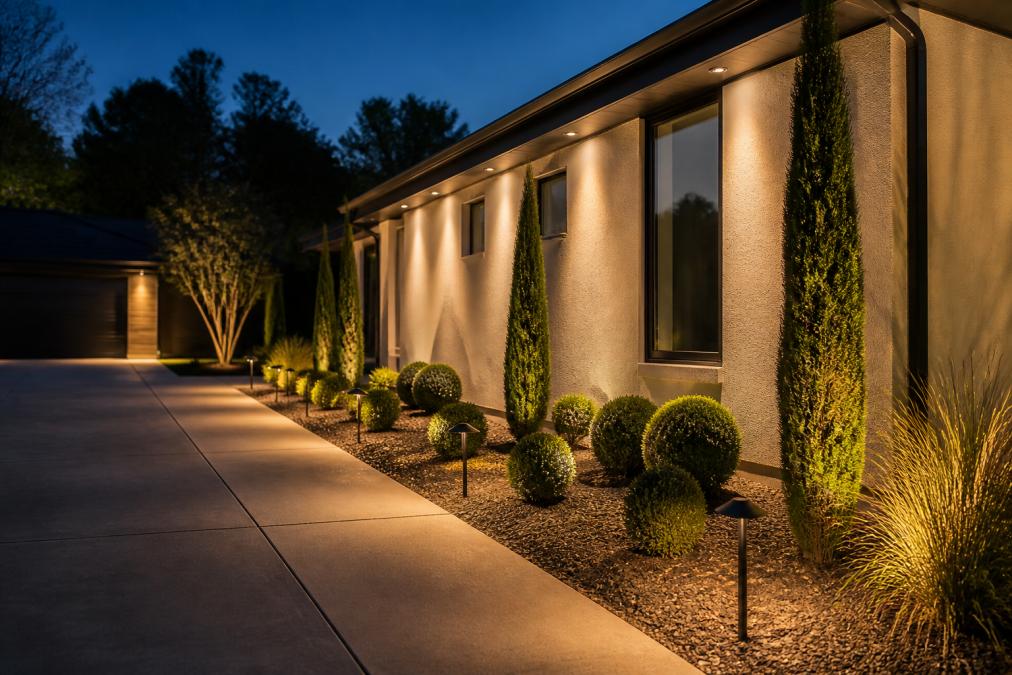
Table of Contents
- Key Features and Benefits of Modern Exterior Lighting for Security
- Best Color Temperature for Outdoor Security Lights
- Motion Sensor vs Dusk-to-Dawn Lighting: A Comparison
- Placement Tips for Exterior Security Lights
- Smart Home Integration and Aesthetic Design
- Energy Efficiency and Cost Savings with LED
- Conclusion: Request a Walk-Through
- Frequently Asked Questions
Last Updated: September 15, 2026
Key Features and Benefits of Modern Exterior Lighting for Security
Modern exterior lighting security is a layered system of motion-activated fixtures, photocells, and smart controls that deters intruders, extends usable outdoor hours, and improves safety. At Paramount Outdoor Lighting Group, we design these systems for properties that want protection without turning the yard into a floodlit parking lot.
The core features that matter are motion detection range, lumens, color temperature, weatherproof rating, and control method. Below, we break down how the pieces fit together and where most installations go wrong.
Motion-Activated vs. Dusk-to-Dawn: Which Deters Intruders?
Motion-activated fixtures win on deterrence, while dusk-to-dawn fixtures win on baseline visibility. The two are partners: a fixture that only switches on at sunset tells an intruder which parts of the property are watched, while one that only reacts to movement leaves a home unlit until someone is already on the walkway. Integrating these lighting strategies into a broader defensive posture remains essential when you secure home while traveling to ensure that your property appears occupied and protected at all times.
The strongest setup pairs both. Dusk-to-dawn photocells keep perimeter paths and entryways lit at low output through the night, while motion-activated heads jump to full brightness when infrared sensors detect movement. That sudden change in light level unsettles someone more than a constant glow, because it signals the property is actively monitored.
Best Color Temperature for Outdoor Security Lights
The best color temperature for outdoor security lights is 3000K to 4000K, the warm-neutral zone of the Kelvin scale, bright enough for clear identification without the harsh blue-white glare of 5000K and above (energy.gov).
Color temperature affects both how well you see a face or vehicle at night and how the light feels to anyone standing in it. Lights above 5000K cast a cold, clinical tone that washes out landscaping; lights below 2700K look warm but can blur fine detail at distance.
| Color Temperature | Appearance | Best Use |
|---|---|---|
| 2700K | Warm white | Patios, ambient accent lighting |
| 3000K | Soft white | Entryways, mixed-use areas |
| 4000K | Cool white | Driveways, perimeter security |
| 5000K+ | Daylight | Utility areas only |
For most homes, 3000K on the house and 4000K at the property edge strikes the right balance. Commercial sites often run 4000K throughout for consistency with parking lot lighting.
Motion Sensor vs Dusk-to-Dawn Lighting: A Comparison
Motion sensor vs dusk-to-dawn lighting comes down to purpose, not preference. Motion sensors excel at detection and deterrence; dusk-to-dawn fixtures excel at consistent, hands-off illumination. Most properties need both, split by how the space is used after dark.
| Feature | Motion Sensor | Dusk-to-Dawn |
|---|---|---|
| Activation | Triggered by movement | Photocell at sunset |
| Energy use | Only when triggered | All night, every night |
| Deterrence | High (sudden change) | Moderate (constant glow) |
| Best for | Driveways, side yards, back gates | Entry paths, signage, parking areas |
| Maintenance | Sensor alignment, occasional false trips | Photocell cleaning, LED lifespan |
A common mistake is installing motion sensors on the primary entry path. Guests and delivery drivers trigger the light constantly, and the homeowner eventually tapes over the sensor. Reserve motion for approach zones and use dusk-to-dawn for anything people walk through routinely.
Placement Tips for Exterior Security Lights
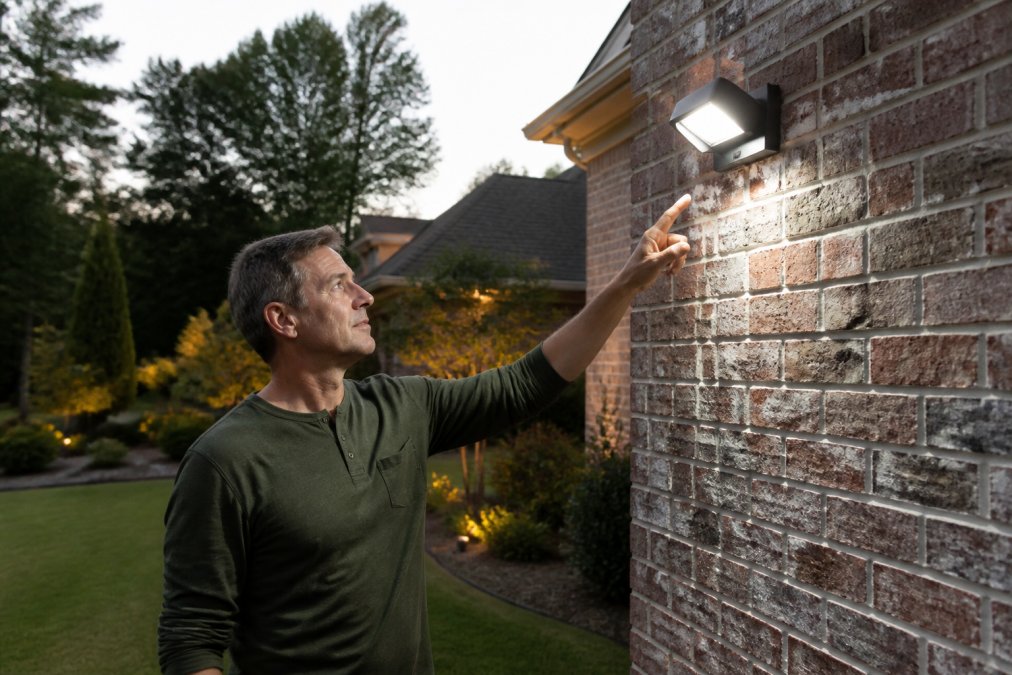
Placement tips for exterior security lights start with one rule: light the approach, not the building. Most break-ins happen at ground-level entry points, so fixtures should illuminate the path to a door, the door itself, and the area around ground-floor windows. Placement is also where a security system becomes a neighborhood problem, and most guides never address that half of the job.
Core Placement Guidelines
- Mount fixtures at 8 to 10 feet so the beam lands on the ground, not in a neighbor's window
- Aim the beam angle down and across the approach path, not straight out
- Cover all four corners of the structure to eliminate blind spots
- Light the garage apron, side gates, and any rear alley access
- Keep fixtures clear of tree branches that trigger false motion readings
Installation height matters more than fixture wattage. A high-output fixture mounted too low throws glare into approaching eyes and creates harsh shadows that hide movement; a moderate fixture mounted correctly sees more.
Aiming to Avoid Light Trespass
Light trespass, spillover onto a neighboring property, is the most common complaint after a security-lighting install, and it is almost always an aiming problem, not a brightness problem. A correctly aimed fixture can be brighter than a mis-aimed one and still cause fewer complaints.
A few aiming mechanics that matter:
- Shield and cut off the top of the beam. A full cut-off fixture directs all light below horizontal. If your fixture is not full cut-off, a shield or visor accessory does most of the work.
- Aim the hot spot at the ground, not the horizon. The brightest part of the beam should land on the walkway or driveway, not on a fence line or a neighbor's second story.
- Check from the neighbor's side. Walk to the property line at night and look back at your house. If you can see the source of the light, not just the illuminated ground, the fixture is aimed too high or too exposed.
- Watch the side-yard geometry. A fixture on the side of a house can throw light directly into a neighbor's bedroom window even when it is aimed "down." Rotate the fixture so the beam runs parallel to the property line rather than across it.
Dark-Sky Practices and Neighbor Etiquette
A growing number of municipalities and homeowner associations have adopted outdoor lighting provisions modeled on dark-sky principles, limiting upward light, capping color temperature, and requiring full cut-off fixtures (darksky.org). Even where no ordinance applies, these practices reduce complaints and often improve the security result.
The working principles are simple:
- Light only what you need. Target the approach path, entry, and ground-floor openings. Do not light the whole yard.
- Keep color temperature at or below 3000K where possible. Warmer light scatters less in the atmosphere and reads as less intrusive to neighbors.
- Use full cut-off fixtures at the perimeter. These direct light downward and eliminate the sky glow that drives most complaints.
- Dim, do not dark. A 30% overnight baseline preserves visibility and deterrence while cutting trespass dramatically.
- Talk to the neighbor before you install, not after. A two-minute conversation about where the fixtures will point prevents most disputes.
Smart Home Integration and Aesthetic Design
Smart home integration turns exterior lighting from independent fixtures into a coordinated system. Modern controls let you schedule scenes, adjust brightness by time of night, trigger lights from a doorbell camera, and manage everything from a phone.
Matching Fixtures to Modern Architecture
A few patterns that work across common modern styles:
Syncing Lights with Cameras, Doorbells, and Hubs
Where Design and Spec Sheets Diverge
Energy Efficiency and Cost Savings with LED
Conclusion: Request a Walk-Through
Frequently Asked Questions
What is the best type of outdoor lighting for security?
The best type combines motion-activated sensors with LED fixtures. Motion-activated floodlights and spotlights are highly effective because they surprise intruders with sudden bright light. For continuous coverage, dusk-to-dawn fixtures provide consistent perimeter lighting. LED efficiency ensures low energy consumption while delivering high lumens. A layered approach using both types, with a color temperature around 3000K, offers the best balance of intruder deterrence and visibility.
How many lumens do I need for effective security lighting?
For effective intruder deterrence, aim for 700 to 1300 lumens at entry points like doors and garages. For broader perimeter lighting or driveway coverage, 1300 to 2000 lumens is more appropriate. Higher lumens are not always better; excessive brightness can create glare and harsh shadows that hide activity. Focus on proper placement and beam angle to direct light where it matters most. A professional can help you calculate the right lumens for your property's specific layout.
Should security lights be motion-activated or dusk-to-dawn?
Both have distinct advantages. Motion-activated lights are excellent for intruder deterrence because they startle unwanted visitors. Dusk-to-dawn lights provide constant ambient lighting for safety and navigation. For maximum security, use a combination: dusk-to-dawn fixtures for perimeter lighting and motion-activated floodlights at key entry points. This layered strategy ensures your property is never fully dark while still surprising anyone who approaches.
What is the best color temperature for outdoor security lights?
The best color temperature for outdoor security lights is between 2700K and 3000K. This warm white light provides clear visibility without the harsh, blue-toned glare of higher Kelvin ratings. Light in this range is also more neighbor-friendly and reduces light pollution. Avoid temperatures above 4000K, as they can be uncomfortable and may disrupt local wildlife. For a natural look that integrates with your home's architecture, 3000K is an ideal choice.