Why Professional Outdoor Lighting Is Worth It
Table of Contents
- What Professional Outdoor Lighting Costs vs. What It Returns
- Professional vs DIY Outdoor Lighting: The Real Differences
- The Core Benefits of Low Voltage Landscape Lighting
- How Professional Lighting Boosts Curb Appeal and Property Value
- Security Lighting and Peace of Mind: Safety Benefits
- The Hidden Costs of Outdoor Lighting: Maintenance and Smart Integration
- Is Professional Outdoor Lighting Worth It? The Final Verdict
- Frequently Asked Questions
Last Updated: September 4, 2026
Most homeowners only think about professional outdoor lighting after dark, when they realize their house has vanished into the night. At Paramount Outdoor Lighting Group, we have designed and installed low-voltage systems across properties, and the value gap between a thoughtful design and a DIY effort is wider than most people expect.
Below, we break down the real math, the genuine differences between professional and DIY work, and the specific benefits that make outdoor lighting one of the smarter investments you can make in your home.
What Professional Outdoor Lighting Costs vs. What It Returns
The upfront cost of professional landscape lighting installation is higher than a trip to the hardware store, but the comparison ignores what you actually get. A professional system is engineered, not assembled, using commercial-grade fixtures, proper low-voltage transformers, and correct wire gauges to prevent voltage drop, the most common reason DIY systems flicker and fail within a year or two.
When you evaluate the cost of professional landscape lighting installation, consider the full lifecycle. A typical DIY setup with inexpensive fixtures often needs replacement components within two seasons. A professionally installed system is designed to last for years with minimal upkeep. The investment return shows up in three places: reduced replacement costs, increased property value, and not spending your weekends troubleshooting wiring.
Professional vs DIY Outdoor Lighting: The Real Differences
The gap between professional and DIY outdoor lighting comes down to three things: design, equipment, and installation quality.
- Design: A professional measures beam spread, lumen output, and color temperature to light specific features. A DIY approach usually results in bright spots and dark voids.
- Equipment: Professional-grade fixtures use sealed housings and weather-resistant materials that survive freeze-thaw cycles without corroding.
- Installation quality: Proper burial depth, waterproof connections, and correct transformer sizing prevent the two biggest failure points: shorts and voltage drop.
Many homeowners tell us they have tried hanging lights themselves, only to worry about safety on a two-story home. That concern is valid. Working at height, routing wire through siding, and making weatherproof connections all carry risk. Professional installers carry the equipment and experience to secure fixtures without damaging your roof or fascia.
The Core Benefits of Low Voltage Landscape Lighting
Low voltage landscape lighting is the industry standard for good reason. Operating at 12 volts rather than line voltage, it is safer to install, more energy-efficient to run, and far more flexible in placement.
The benefits of low voltage landscape lighting extend beyond safety. LED technology has made these systems remarkably efficient, consuming a fraction of the energy of older halogen fixtures while producing superior light quality. A well-designed low-voltage system can run for pennies a day, which makes it practical to leave on from dusk until dawn if you want the security benefit.
How Professional Lighting Boosts Curb Appeal and Property Value
Curb appeal is not a vague real estate cliché. It is a measurable factor in how quickly a home sells and at what price. Professional outdoor lighting directly influences that measurement.
The ROI Breakdown: What the Numbers Say
Real estate professionals consistently report that exterior presentation influences buyer perception. A home that looks inviting at night photographs better, attracts more showings, and reads as well-maintained.
Consider a home. A professionally designed and installed lighting system can be a significant investment depending on the size of the property and the complexity of the design. In a competitive market, that investment can be the difference between a home that sits for 60 days and one that receives multiple offers in the first two weeks. An improvement in perceived value, which is realistic when the exterior is professionally presented, can translate to a substantial return on that same home. The lighting can pay for itself before the first offer is even made.
Listing photos are the first filter. Most buyers scroll through listings in the evening after work. A home with warm, inviting exterior lighting stands out in a thumbnail; a dark house gets skipped. That is why professional photographers schedule shoots during the 'golden hour' and why some agents now request twilight shots.
The 'Staging After Dark' Effect
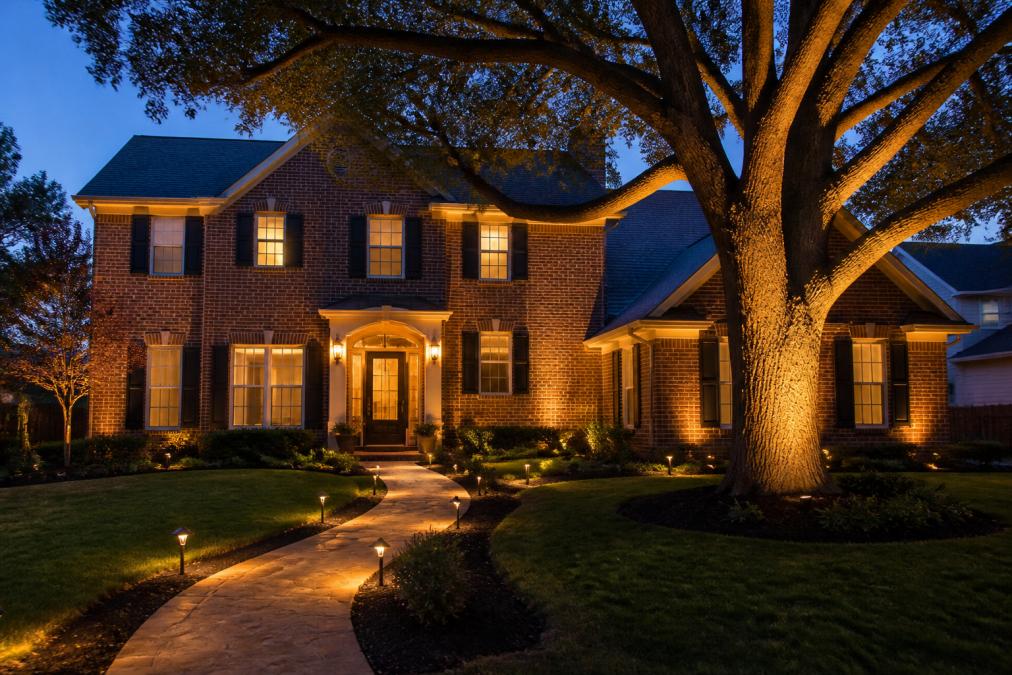
Professional lighting does for the exterior what staging does for the interior. It creates a mood, defines spaces, and guides the eye. A well-lit walkway says 'welcome.' Uplighting on a stone facade says 'quality construction.' A softly lit patio says 'imagine yourself here on a summer evening.' These are the specific visual cues that trigger a buyer's emotional response.
This is why the design matters as much as the fixtures. A professional designer does not just install lights; they create layers. Ambient light from downlights in the eaves provides general illumination. Accent lights highlight the texture of the siding or the shape of a specimen tree. Path lights define the route to the front door. The result feels intentional and expensive, because it is.
The Resale Value Question: What Appraisers Look For
Appraisers do not have a line item for 'outdoor lighting,' but they do assess overall condition and appeal. A professionally lit exterior contributes to the impression of a well-cared-for property, signaling that the homeowner invested in quality systems, not just cosmetic upgrades. That perception influences the appraiser's adjustments for condition and desirability.
There is also a practical component. Permanent, well-installed lighting is a feature that does not require the buyer to do anything. For buyers who are not handy, that is a genuine selling point. They are not buying a problem; they are buying a finished system that works.
Highlighting Architectural Features
Good lighting design reveals what your architect intended. Uplighting grazes the texture of stone or brick. Downlighting from eaves creates a soft, moonlit effect on patios. Path lights define the approach to your front door.
The goal is not to make the house look like a stage set. It is to create depth and dimension that disappears at night. A common concern is that architectural lighting will look over-the-top. Done correctly, it does the opposite. The best designs are subtle; you notice the house, not the lights.
Extending Your Outdoor Living Space
Outdoor lighting effectively adds hours of usability to your property every single day. A patio without lighting is unusable after sunset. The same patio with layered, dimmable lighting becomes a dining room, a lounge, or a gathering space.
For restaurant owners and hospitality businesses, this is not a luxury. It is a capacity decision. An invitingly lit patio draws customers in and keeps them comfortable. For homeowners, it means your deck and yard stop being wasted square footage once the sun goes down.
The Dark House Problem
A dark house at night does not just look uninviting; it looks vacant. Vacant homes are targets for vandalism and theft. A professionally lit exterior signals occupancy and care. Neighborhoods with consistent, well-maintained exteriors command higher prices, and lighting is part of that consistency.
When you compare the cost of professional lighting against the potential cost of a delayed sale, a price reduction, or a break-in, the value proposition sharpens. The lighting is not an expense; it is an insurance policy on your property's presentation and security.
Security Lighting and Peace of Mind: Safety Benefits
Beyond aesthetics, professional outdoor lighting serves a critical safety function. Pathway lighting prevents trips and falls on steps and uneven walkways. Illuminated entry points deter would-be intruders who prefer to work in darkness.
The distinction between security lighting and landscape lighting matters. A single floodlight on a motion sensor creates harsh shadows and glare, which can reduce visibility by causing your pupils to contract. A layered approach, with low-level ambient light plus targeted accent lighting, provides better visibility without the harsh glare.
The Hidden Costs of Outdoor Lighting: Maintenance and Smart Integration
Most articles stop at the installation invoice. The real financial picture of outdoor lighting includes what happens in year two, year five, and year ten. Understanding those costs is what separates a sound investment from a recurring expense.
The Real Maintenance Math
A professionally installed low-voltage system is not maintenance-free, but the maintenance it requires is predictable and inexpensive. The annual checklist is straightforward: wipe debris off fixture lenses, trim back plant growth that can shade or push against fixtures, and inspect connections after extreme weather events. Most homeowners spend under an hour per season on this.
The cost difference shows up when components fail. A typical DIY-grade fixture from a big-box store often fails within two seasons because moisture enters the non-sealed housing (energy.gov). A professional-grade fixture with a sealed brass or aluminum housing is designed to last 10 to 15 years (ies.org). Over a decade, the DIY approach means replacing fixtures two or three times, plus the labor of digging them up and re-burying wire each time. The professional approach means replacing bulbs (LED modules) once or twice, a five-minute job per fixture.
Transformers tell a similar story. A cheap 12-volt transformer might hum, overheat, or fail within three years. A quality multi-tap transformer with a photocell and timer runs quietly for a decade or more. The hidden cost of the cheap transformer is not just the replacement price; it is the risk of voltage spikes that damage every fixture connected to it.
Smart Integration: Beyond the App
The second hidden cost, and hidden opportunity, is how your lighting system connects to the rest of your property. Professional-grade systems now integrate with the major smart home ecosystems: Amazon Alexa, Google Home, and Apple HomeKit. This is not a gimmick. It changes how you use the system daily.
Scheduling is the most practical feature. Instead of relying on a photocell that reacts to cloud cover, you can set precise times for different zones. Path lights come on at sunset, but the patio lights stay off until you arrive home. The front entry lights dim to 20 percent at 11 p.m. so they do not blast into your neighbors' windows. All of this happens without you opening an app, because the system runs on a schedule you set once.
Geofencing takes it further. Your lights can respond to your phone's location. When you are five minutes from home, the driveway and entry lights come on. When you leave for vacation, the system can randomize the schedule to mimic occupancy, a security feature that a simple timer cannot replicate.
For homeowners who want color, permanent architectural lighting systems (like the JellyFish Lighting systems we install as an authorized dealer) offer app-controlled RGB color changes. This eliminates the seasonal install-and-remove cycle entirely. Holiday lighting becomes a software preset, not a weekend on a ladder. The system also supports static white light for everyday use, so you are not living with color you do not want.
The Integration Cost Trap
The trap with smart lighting is buying fixtures that only work with a proprietary hub that dies in three years. Professional installers specify systems that use standard protocols (Zigbee, Z-Wave, or Wi-Fi) and that remain functional even if the smart features are not used. Ask whether the system works with a simple wall switch as a fallback. If the answer is no, you are buying a product that can become a brick.
A professionally installed smart system also includes proper network planning. Outdoor Wi-Fi signals are weak, and a transformer in a garage may be far from your router. Installers address this with wired connections or mesh extenders as part of the design, not as an afterthought. That planning is the difference between a system that works reliably for years and one that drops offline every time the router reboots.
Environmental Impact and Wildlife Protection
A maintenance and integration conversation would be incomplete without addressing the environmental footprint. Professional lighting design increasingly considers light pollution and its effect on nocturnal wildlife. The International Dark-Sky Association (IDA) has established guidelines for responsible outdoor lighting, and professional installers are increasingly familiar with these standards (darksky.org).
The core principles are simple: use fully shielded fixtures that direct light downward, choose warm color temperatures (2700K or lower) that are less disruptive to insects and migrating birds, and avoid over-lighting. A professional design lights the ground and the architectural features you want to see, not the sky. This approach reduces energy waste, minimizes glare for neighbors, and preserves the natural darkness that local ecosystems depend on.
For the environmentally conscious homeowner, this is a differentiator. A DIY floodlight setup often blasts light in every direction. A professionally designed system achieves its security and aesthetic goals while respecting the surrounding environment. This is not a compromise; it is better engineering.
Is Professional Outdoor Lighting Worth It? The Final Verdict
Professional outdoor lighting is worth it for homeowners and businesses that value curb appeal, security, and usable outdoor space, and that want those benefits without the recurring headache of failed DIY fixtures.
The decision comes down to what you are optimizing for. If you want a temporary string of lights for a single event, DIY is fine. If you want a permanent system that enhances your property value, extends your living space, and operates reliably for years, the cost of professional landscape lighting installation is justified by the engineering, the equipment, and the installation quality.
| Consideration | DIY Approach | Professional Installation |
|---|---|---|
| Upfront cost | Lower | Higher |
| Fixture lifespan | Often 1-2 seasons | Many years with proper care |
| Design quality | Trial and error | Measured and intentional |
| Maintenance burden | On you | Minimal, supported |
| Smart integration | Limited | Full color and pattern control |
At Paramount Outdoor Lighting Group, we bring four specialized divisions under one roof, covering landscape, patio, holiday, and permanent architectural lighting. That means one team handles everything from the initial design to installation and ongoing support, backed by decades of experience. If you are weighing whether professional outdoor lighting is worth it for your property, request a walk-through and see the difference in person. Get started with Paramount Outdoor Lighting Group and see your property in a new light.
Frequently Asked Questions
Is permanent outdoor lighting worth the cost?
Professional outdoor lighting is an investment that pays off in several ways. High-quality systems increase curb appeal, which can boost property value and help a home sell faster. They also extend your usable outdoor living space and improve security. Unlike cheap DIY kits that fail within a year or two, a professionally installed system uses weather-resistant fixtures and proper wiring to last for years, making it a better long-term value.
How does professional landscape lighting increase property value?
Professional landscape lighting increases property value by enhancing curb appeal and highlighting the best features of your home and yard. A well-lit exterior makes a strong first impression, which appraisers and potential buyers notice. Real estate studies show that homes with attractive outdoor lighting are perceived as more valuable and desirable. It signals that the property has been well-maintained and offers an inviting, safe, and usable outdoor space.
What are the safety and security benefits of professional outdoor lighting?
Professional outdoor lighting improves safety by illuminating pathways, steps, and changes in elevation to prevent trips and falls. Strategically placed security lighting deters potential intruders by eliminating dark hiding spots around entry points. Motion-sensor lights can alert you to activity. A professionally designed system ensures even, glare-free illumination that enhances visibility without creating harsh shadows, making your property both safer and more secure.
What is the typical lifespan of a professional-grade outdoor lighting system?
Professional-grade outdoor lighting systems are built to last. Quality LED fixtures typically operate for 50,000 hours or more, which translates to years of use. Professional installation includes weather-resistant fixtures, proper low-voltage wiring, and corrosion-proof connections, all of which prevent the common failures seen in DIY systems. With minimal maintenance, such as cleaning fixtures and trimming landscaping, a professional system can perform reliably for many years.
This article was written using GrandRanker