
Cost of Professional Landscape Lighting Installation
Table of Contents
- What Affects the Cost of Professional Landscape Lighting Installation
- Landscape Lighting Installation Cost Per Fixture
- Labor Costs and Installation Timeline
- Benefits of Professional Outdoor Lighting Design
- DIY vs Professional Landscape Lighting Installation
- ROI and Total Cost of Ownership
- Getting an Accurate Quote for Your Project
- Conclusion
Last Updated: August 24, 2026
What Affects the Cost of Professional Landscape Lighting Installation
The price of professional landscape lighting installation depends on four main categories: fixture selection and quantity, electrical system type, site conditions, and labor complexity. A simple project with ten path lights on a flat, accessible property costs dramatically less than the same number of fixtures on a sloped lot with buried utility lines. Understanding these layers helps you make decisions that align with your budget and vision.
Fixture Type and Quantity
Different fixture types carry different price points. Path lighting, uplighting, accent lighting for architectural features, and hardscape lighting each bring their own cost structure. A small residential landscape might use eight to fifteen fixtures, while a larger property could require forty or more. Each additional fixture adds hardware cost, wiring, connections, and installation labor.
Material quality matters significantly. Brass fixtures with copper housing and extended weatherproofing cost more than basic plastic alternatives but last longer and require less maintenance. Higher lumen outputs also affect pricing, as they demand more powerful transformers and heavier electrical loads.
Low Voltage vs. Line Voltage Systems
Low voltage systems run on 12 volts, stepping down from standard household current through a transformer (fcc.gov). Line voltage systems operate at standard 120-volt household power (nfpa.org).
Low voltage installations typically cost less upfront because they require smaller conduit, lighter gauge wire, and simpler electrical work. Most residential landscape lighting today uses low voltage for these reasons. Line voltage systems demand heavier electrical infrastructure, larger gauge wire, and often require a dedicated circuit from your home's electrical panel, usually necessitating a licensed electrician. For typical residential landscapes, the cost premium rarely justifies the benefits.
Site Conditions and Complexity
Your property's physical characteristics dramatically influence installation costs. A flat, open yard with accessible soil and no underground utilities is straightforward. A sloped property with rocky soil, existing utility lines, or mature tree root systems complicates the work considerably.
Trenching depth and distance matter. Shallow trenching for low voltage wire in accessible areas moves quickly, while deep trenching around obstacles or in compacted soil slows progress and increases labor hours. If your property has known utility lines, the installer must locate them before digging. Existing hardscape features and trees with extensive root systems also require more careful planning and manual labor.
Landscape Lighting Installation Cost Per Fixture
Breaking down costs by individual fixture type helps you prioritize which areas of your property get professional attention first.
Path Lighting and Accent Lighting
Path lighting typically represents the entry point for professional landscape lighting. Because these low-profile fixtures are smaller and simpler than other types, the cost per fixture is generally lower. Installation is straightforward: dig a small hole, set the fixture, run the wire, and cover.
Accent lighting, which highlights specific landscape features like shrubs or architectural details, often costs slightly more per fixture because placement requires more design consideration. Most residential projects start with path and accent fixtures, adding uplighting and hardscape lighting in later phases if budget allows.
Uplighting and Hardscape Lighting
Uplighting, directing light upward onto trees or walls, creates dramatic visual impact but requires more precise installation. The fixture must be positioned and angled correctly to avoid glare and achieve the desired effect.
Hardscape lighting illuminates patios, decks, and steps. These fixtures often integrate into the hardscape itself or require custom mounting. Retrofitting hardscape lighting onto an established patio is more labor-intensive than building it in from the start. Both uplighting and hardscape lighting contribute significantly to overall ambiance and are where professional design makes the biggest difference. custom outdoor kitchens.
Labor Costs and Installation Timeline
Labor represents the largest component of most professional landscape lighting installation projects. Installation typically takes one to three days for a residential project, depending on complexity and fixture count. A straightforward fifteen-fixture installation on a flat, accessible property might take one full day, while a forty-fixture installation with challenging site conditions could stretch to three days or more.
Labor costs vary by region and installer experience level. A technician from a professional outdoor lighting company brings expertise in design, electrical safety, and system optimization. They work efficiently because they've installed hundreds of systems and understand how to avoid costly mistakes. They also carry insurance and proper licensing, which protects you if something goes wrong.
Benefits of Professional Outdoor Lighting Design
Choosing professional installation over DIY work delivers benefits beyond just getting lights in the ground.
Curb Appeal and Property Value
Professional landscape lighting dramatically enhances curb appeal. Your home looks intentional and cared for at night. Homes with professional landscape lighting photograph better, show better during evening viewings, and create a sense of quality and attention to detail. Buyers interpret good outdoor lighting as a sign that the owner has invested in the property and maintained it well.
Smart Lighting Integration and Energy Efficiency
Modern landscape lighting systems increasingly incorporate smart controls. Photocells automatically turn lights on at dusk and off at dawn. LED fixtures have become the standard because they consume far less energy than older halogen or incandescent options. A low voltage LED system might use only a few hundred watts total. Smart integration means you can adjust your system seasonally through software rather than rewiring.
DIY vs Professional Landscape Lighting Installation
The temptation to install landscape lighting yourself is understandable, but this comparison often misses hidden costs and risks.
Safety, Electrical Codes, and Permitting
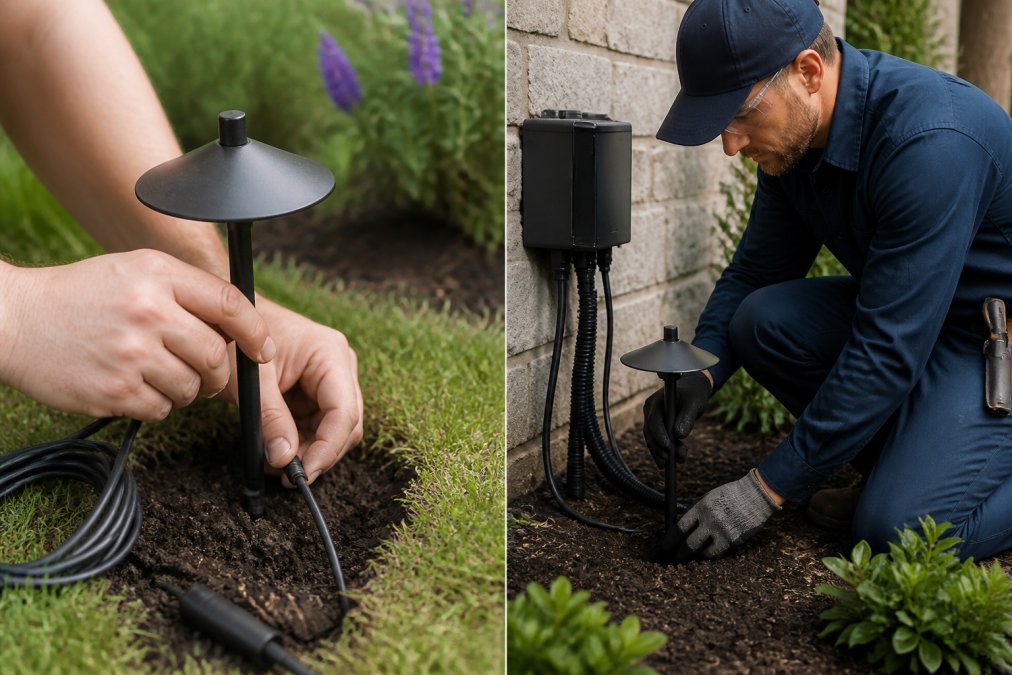
Electrical work must comply with local codes. Even low voltage systems operate through transformers connected to household current, which carries real hazards if installed incorrectly. Most jurisdictions require permits for outdoor electrical work (nfpa.org). If you install without a permit and something goes wrong, your homeowner's insurance may deny claims because the work wasn't permitted.
Line voltage systems are particularly dangerous for DIY installation and absolutely require a licensed electrician. Professional installers carry licensing and insurance, understand local electrical codes, pull permits, schedule inspections, and ensure the system passes. This protects you legally and practically.
Warranty and Long-Term Reliability
Professional installations typically come with warranties on both materials and labor. If a fixture fails within the warranty period, the installer replaces it. DIY installations come with no labor warranty. A poorly installed DIY system might need repairs within a year or two, and the cost of these repairs can quickly exceed the savings you thought you achieved by installing it yourself.
The reliability of a professional system stems from proper design and installation. Correct wire gauge prevents voltage drop, proper conduit protects wire from damage, and correct transformer sizing ensures the system operates within design parameters. These details matter for long-term reliability.
ROI and Total Cost of Ownership
Evaluating landscape lighting purely on installation cost misses the bigger financial picture.
Maintenance Contracts and System Longevity
Professional systems designed and installed correctly require minimal maintenance. LED fixtures last ten to fifteen years or more. Some professional installers offer maintenance contracts that include seasonal adjustments, cleaning, and repairs. A system installed correctly in 2026 might still be performing well in 2035 or beyond, while a DIY system that fails and requires replacement in 2028 costs you twice.
Getting an Accurate Quote for Your Project
Start by documenting your property with photos of areas you want to light, noting square footage and any known utilities. Describe the effect you want and share your budget range. A professional installer can work within constraints and help you prioritize.
The best quotes come from on-site consultations. An installer visits your property, assesses site conditions, understands your vision, and provides a detailed estimate. Request quotes from multiple installers, comparing not just price but what's included: design consultation, permitting, system testing, and warranty coverage.
The cost of professional landscape lighting installation reflects the complexity of creating an outdoor lighting system that's safe, reliable, and beautiful. It's an investment in your property's nighttime appearance, your ability to enjoy your outdoor spaces after dark, and the long-term value of your home. Paramount Outdoor Lighting Group brings decades of experience designing and installing systems that transform properties. We handle everything from initial consultation and design through installation, testing, and ongoing maintenance. Request a walk-through to discuss your project and see how professional landscape lighting can enhance your property.
Frequently Asked Questions
What is the typical cost of installing outdoor lighting?
The total cost of professional landscape lighting installation depends on project scope, fixture count, system type, and site conditions. Pricing varies based on whether you're installing low voltage fixtures for accent lighting or line voltage systems for broader coverage. Request a site assessment and quote to understand costs for your specific property and design goals.
How much does landscape lighting installation cost per fixture?
Installation cost per fixture includes the fixture itself, wiring, transformer (if needed), labor, and trenching. Path lighting and accent lighting fixtures typically represent different price points than uplighting or hardscape lighting. Factors like voltage drop, wire gauge requirements, and site accessibility affect per-fixture costs. A professional assessment determines the most cost-effective configuration for your landscape.
Do you need an electrician to install landscape lighting?
Low-voltage landscape lighting systems are generally safer than line voltage systems and don't always require a licensed electrician, depending on local electrical codes and permitting requirements. However, professional installation ensures proper transformer sizing, circuit capacity, weatherproofing, and compliance with electrical standards. For line voltage systems or complex installations, an electrician is typically required. Professional installers understand local codes and obtain necessary permits.
Is professional landscape lighting worth the investment compared to DIY?
Professional outdoor lighting design delivers curb appeal, enhanced property value, proper electrical safety, warranty coverage, and system reliability that DIY approaches often lack. Professionals assess site conditions, calculate voltage drop, select appropriate fixtures and materials, and ensure code compliance. They also provide maintenance support and handle repairs. The long-term value, durability, and reduced risk of electrical or safety issues typically justify professional installation costs.
What factors influence the total cost of a landscape lighting project?
Key cost factors include fixture count and type, low voltage versus line voltage systems, site complexity, trenching requirements, wire gauge and conduit needs, transformer capacity, labor hours, electrical codes and permitting, material quality tiers, and smart lighting integration. Property size, existing hardscape, soil conditions, and desired lumen output and color temperature also affect pricing. A site assessment identifies these factors to provide an accurate quote.
What should I expect from a professional landscape lighting design consultation?
A professional consultation includes a site assessment to evaluate your property's layout, existing electrical infrastructure, and lighting goals. The designer discusses fixture placement, outdoor living space usage, desired lumen output, color temperature preferences, and budget. They explain system options, material quality choices, warranty coverage, and maintenance requirements. This process ensures the final design meets your needs, complies with electrical codes, and delivers the curb appeal and property value enhancement you're seeking.
This article was written using GrandRanker