
Benefits of Low Voltage Landscape Lighting
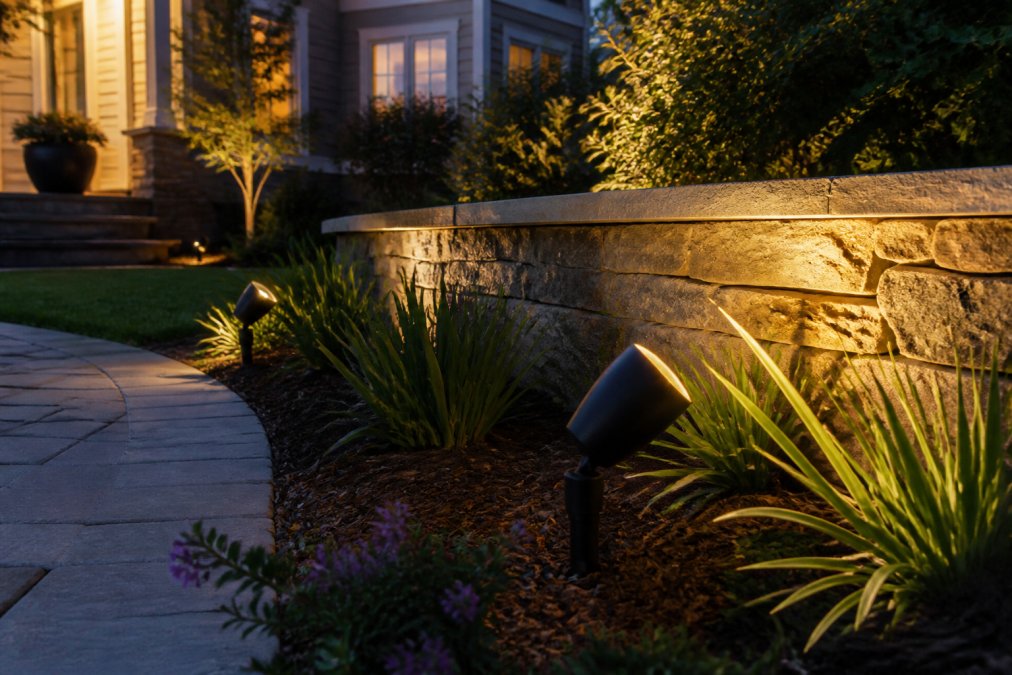
Table of Contents
- Why Low Voltage Landscape Lighting Stands Out
- Safety Benefits of 12V Systems
- Energy Efficiency and Power Consumption Advantages
- Low Voltage vs Line Voltage Landscape Lighting
- Best Low Voltage Outdoor Lighting Fixtures for Your Property
- Landscape Lighting Transformer Sizing and Installation
- Design Versatility and Aesthetic Appeal
- Cost Savings and Long-Term Value
Last Updated: August 23, 2026
Why Low Voltage Landscape Lighting Stands Out
Low voltage landscape lighting operates at 12 volts, delivering safety, efficiency, and design flexibility that line voltage cannot match. A transformer steps down standard household current to safe 12-volt output, eliminating the complexity and hazards of traditional line voltage installations. The technology has matured, LED fixtures are standard, transformers are reliable, and installation methods are well-documented. Paramount Outdoor Lighting Group has spent decades perfecting low voltage landscape lighting design and installation, making these benefits accessible to any property owner.
Safety Benefits of 12V Systems
At 12 volts, electrical current poses no shock hazard to homeowners, installers, or anyone contacting the wiring (osha.gov). Line voltage (120V or 240V) requires professional installation, rigid conduit, and strict code adherence; a mistake can result in serious injury. With 12V systems, this risk disappears. You can safely handle wiring with bare hands, bury cables in shallow trenches without rigid protection, and make repairs without a licensed electrician.
Direct burial cable rated for 12V use eliminates another safety concern. Traditional high-voltage outdoor wiring must be protected in conduit, adding cost and complexity. Low voltage direct burial cable can be placed directly in soil, making retrofitting existing landscapes far simpler and remaining safe even if accidentally cut during future landscaping work.
Weather resistance is built into proper low voltage components. All outdoor fixtures, transformers, and connections are rated for moisture and temperature extremes. Most quality low voltage fixtures carry IP65 or higher ratings, withstanding heavy rain, snow, and freeze-thaw cycles without degradation (iec.ch).
Energy Efficiency and Power Consumption Advantages
Low voltage landscape lighting consumes significantly less power than line voltage systems. A typical 12V LED path light draws 1-3 watts, while a comparable 120V fixture might use 10-20 watts. This difference compounds across an entire installation.
Efficiency gains come from lower voltage and LED technology. LED fixtures offer 80-90% efficiency compared to 50-60% for incandescent or halogen bulbs (energy.gov). A landscape with 20 path lights, 5 spotlights, and 3 accent lights might draw 300-400 watts with traditional line voltage but only 60-100 watts with low voltage LEDs. Over a typical 10-hour evening operation, this creates meaningful monthly electricity savings.
Heat dissipation becomes irrelevant with 12V LED systems. Traditional high-wattage fixtures generate substantial heat, requiring ventilation and creating fire hazards near vegetation. Low voltage LED fixtures remain cool to the touch, extending fixture lifespan. Modern transformers are efficient, drawing less than 5 watts in standby mode. When factoring in the dramatic reduction in fixture power consumption, the overall system remains far more efficient than line voltage alternatives.
Low Voltage vs Line Voltage Landscape Lighting
Installation Complexity: Line voltage requires trenching to 18 inches depth, rigid conduit, and licensed electrician approval. Low voltage allows shallow trenching (6-12 inches), no conduit required for direct burial cable, and DIY installation is feasible for most homeowners. Line voltage installations often require professional electricians at $75-150 per hour, while low voltage can be handled by the property owner or general contractor.
Voltage Drop Considerations: Low voltage systems experience voltage drop over distance; a 100-foot run from transformer to fixture can lose 2-3 volts if undersized wire is used. Proper wire gauge selection (typically 12 or 10 gauge for low voltage) solves this completely. Line voltage experiences minimal voltage drop over residential distances but requires rigid conduit.
Safety and Maintenance: 12V systems eliminate shock hazard entirely. Repairs can be made by the homeowner; line voltage repairs demand a licensed electrician. Over a 10-20 year lifespan, this difference translates to significant cost savings.
Design Flexibility: Low voltage systems allow fixture placement anywhere within cable reach of the transformer. Line voltage requires outlet proximity or additional conduit runs, limiting creative lighting design.
Cost Comparison: Initial installation of line voltage costs more due to labor, conduit, and professional requirements. Low voltage has lower upfront costs but requires a quality transformer. Over time, low voltage's lower operating costs and simpler maintenance offset any initial price difference.
| Aspect | Low Voltage (12V) | Line Voltage (120V) |
|---|---|---|
| Installation Depth | 6-12 inches | 18+ inches |
| Conduit Required | No (direct burial) | Yes (rigid) |
| Professional Install | Optional | Required |
| Shock Hazard | None | Significant |
| Voltage Drop | Requires proper wire gauge | Minimal over distance |
| Repair Complexity | Homeowner-friendly | Licensed electrician only |
| Design Flexibility | Excellent | Limited by outlets |
| Operating Cost | Lower (LED efficiency) | Higher (traditional fixtures) |
Best Low Voltage Outdoor Lighting Fixtures for Your Property
Path Lights are the foundation of most residential installations. These 12-18 inch tall fixtures line walkways, driveways, and garden paths. Modern low voltage path lights use LED sources delivering 100-300 lumens with color temperature options from 2700K (warm white) to 5000K (daylight). Warm white (2700K-3000K) is preferred for residential landscapes because it feels inviting and reduces light pollution.
Spotlights and Accent Lights highlight architectural features, trees, and landscape elements. A quality spotlight produces 500-1500 lumens with adjustable beam angles (typically 15-60 degrees). Uplighting trees creates dramatic silhouettes; downlighting from eaves illuminates patios and seating areas.
Well Lights are recessed into the ground, creating subtle illumination without visible fixtures. These work exceptionally well in planting beds and along pathways. Well lights produce 200-500 lumens and are available in various beam angles.
Deck and Step Lights mount directly onto deck railings, steps, or walls. These low-profile fixtures (typically 2-4 inches) provide localized illumination for safety and ambiance, producing 50-200 lumens.
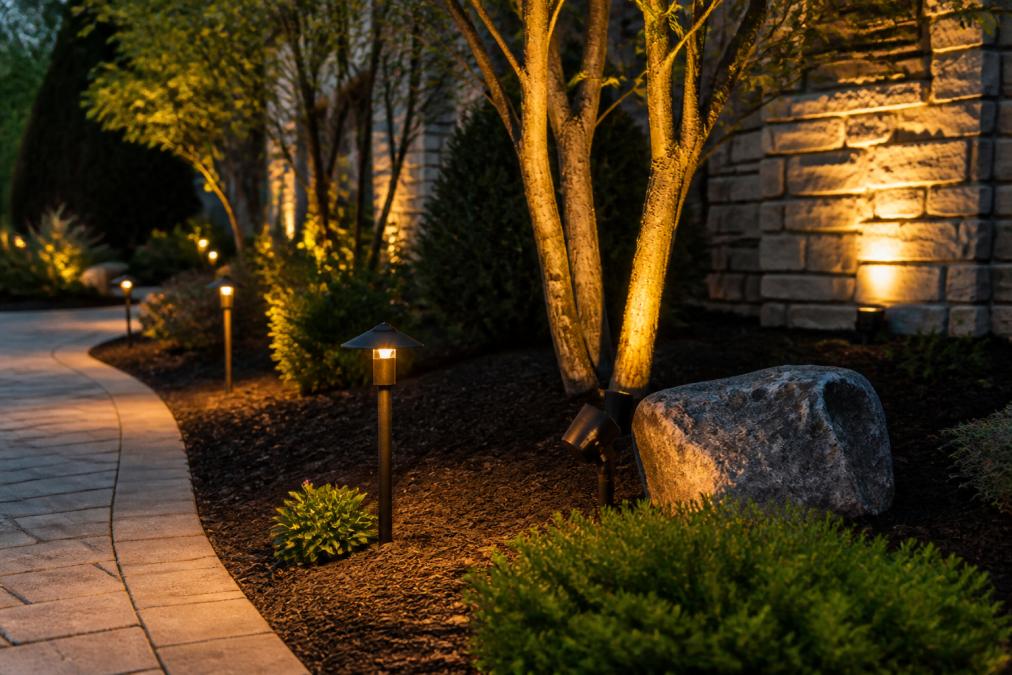
Lumen Output and Color Temperature Matter: Most residential pathways require only 100-200 lumens for safe passage. Accent lighting typically needs 300-800 lumens depending on target size and desired impact. Warm white (2700K-3000K) creates an inviting, residential feel. Neutral white (4000K) suits commercial properties and modern architectural styles.
IP Ratings and Weather Resistance: All outdoor fixtures need adequate weather protection. IP65 ratings mean the fixture withstands water jets and dust. For residential landscapes, IP65 is sufficient; IP67 is preferred for fixtures near water features. backyard party lighting.
Landscape Lighting Transformer Sizing and Installation
The transformer is the critical component that determines whether your low voltage landscape lighting system performs reliably.
Transformer Capacity and Wattage: Transformers are rated by output wattage: 150W, 300W, 600W, or higher. Calculate total fixture wattage by adding each light's power consumption. A typical residential landscape with 20 path lights at 2W each (40W), 5 spotlights at 8W each (40W), and 3 accent lights at 10W each (30W) totals 110W. This system requires at minimum a 150W transformer, but a 300W transformer is preferable. Transformers operate most efficiently at 50-80% load, and a 300W transformer at 110W provides headroom for future additions.
Voltage Drop Calculations: Voltage drop increases with distance and decreases with larger wire. The National Electrical Code recommends maximum voltage drop of 5% for branch circuits. Using 12-gauge direct burial cable, maximum recommended run length is approximately 100 feet. Using 10-gauge cable extends this to 150+ feet. Undersizing wire creates dim lights at the end of runs, a common installation mistake.
Transformer Location: Place the transformer as close as practical to the area being lit. Mount it on an exterior wall, in a weatherproof box, or in a protected location. Ensure it's accessible for maintenance and future modifications.
Photocell and Timer Integration: Most quality transformers include built-in photocell sensors that automatically turn the system on at dusk and off at dawn. Some offer programmable timers for additional control. These safety features are essential.
Professional Installation vs DIY: Low voltage landscape lighting is one of the few outdoor electrical projects homeowners can safely undertake. However, improper installation creates problems: undersized transformers, incorrect wire gauge, poor connections that corrode, and inadequate voltage drop planning. Paramount Outdoor Lighting Group recommends professional installation for complex layouts or challenging terrain. For straightforward applications, a knowledgeable homeowner can successfully install a low voltage system.
Design Versatility and Aesthetic Appeal
Low voltage landscape lighting enables design approaches impossible with line voltage systems.
Layered Lighting Design: Professional landscape lighting uses three layers: ambient (general illumination), task (functional lighting for pathways), and accent (highlighting features). Low voltage systems excel at creating these layers because fixtures can be positioned precisely where needed. Ambient lighting might come from well lights or downlighting from eaves. Task lighting uses path lights along walkways and deck steps. Accent lighting highlights trees, stone walls, water features, or architectural details.
Uplight, Downlight, and Sidelighting Techniques: Uplighting trees creates dramatic silhouettes against the night sky, working particularly well with mature trees that have interesting branch structure. Downlighting from eaves or overhangs illuminates patios and seating areas while reducing glare. Sidelighting highlights texture and architectural details, creating shadow and dimension.
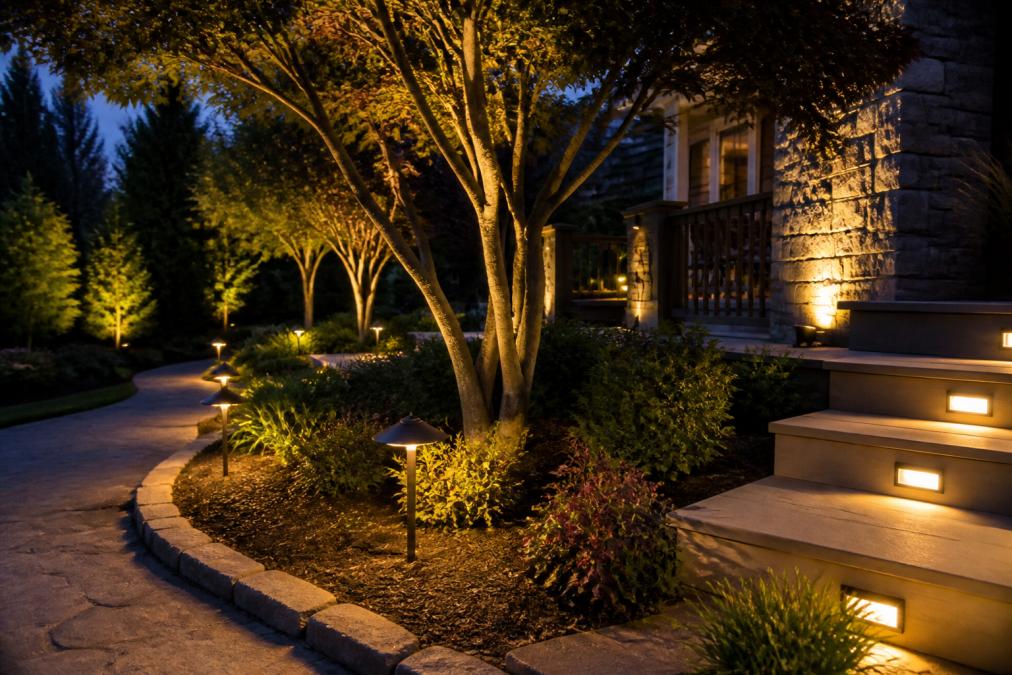
Color Temperature and Mood: Warm white (2700K-3000K) feels residential and inviting, mimicking traditional incandescent lighting. Neutral white (4000K) suits modern architectural styles and commercial applications. The choice of color temperature sets the entire property's nighttime character.
Avoiding Over-Lighting: Landscape lighting should enhance, not overwhelm. Subtle illumination that guides movement and highlights key features is more sophisticated than bright, uniform coverage. Less light, better placed, typically creates superior results.
Cost Savings and Long-Term Value
Installation Cost Advantages: Line voltage installation requires licensed electrician labor at $75-150 per hour. A modest landscape might require 8-16 hours of professional installation, costing $600-2,400 in labor alone. Low voltage installation can often be completed by the homeowner or general contractor, reducing labor costs to $200-600 or eliminating them entirely. Direct burial cable costs $0.50-1.00 per foot; line voltage conduit costs significantly more.
Operating Cost Reduction: LED fixtures in low voltage systems consume 80-90% less energy than traditional high-wattage line voltage fixtures. Over a 10-year lifespan, energy savings often exceed the initial system cost.
Longevity and Maintenance: Quality low voltage fixtures last 10-15 years or longer. LED sources last 25,000-50,000 hours (10-20+ years of typical use). Transformers are durable and rarely require replacement. Maintenance is minimal; repairs don't require professional electricians.
Property Value Enhancement: Professionally designed landscape lighting increases curb appeal and perceived property value. Well-lit properties appeal more favorably to potential buyers.
Return on Investment: For residential properties, the payback period is typically 5-7 years when factoring in energy savings, reduced maintenance costs, and enhanced curb appeal.
Landscape lighting transforms how your property looks and functions after dark. Low voltage landscape lighting delivers safety, efficiency, and design flexibility that traditional line voltage cannot match.
Paramount Outdoor Lighting Group specializes in expertly crafted low-voltage lighting design and professional installation. Our team analyzes your property, sizes transformers correctly, selects appropriate fixtures, and ensures proper voltage drop calculations. Request a walk-through to see how low voltage landscape lighting can enhance your property's nighttime appearance while delivering years of reliable, efficient operation.
Frequently Asked Questions
Do low voltage landscape lights use a lot of power?
No. Low voltage landscape lighting systems consume significantly less electricity than traditional line voltage systems. A typical 12V LED fixture draws 3-7 watts per light, while line voltage equivalents use 20-40 watts or more. Running a full landscape lighting system for 8 hours daily costs just a few dollars per month in electricity. LED technology further reduces consumption by 75-80% compared to halogen bulbs, making low voltage systems ideal for homeowners seeking energy efficiency without sacrificing brightness or outdoor illumination quality.
What are the disadvantages of using low voltage landscape lighting?
The primary limitation is voltage drop over distance. Long cable runs (beyond 100 feet) can reduce brightness at fixtures farthest from the transformer. Proper wire gauge selection and transformer sizing prevent this issue. Initial setup costs for transformer installation and professional design may be higher than basic line voltage systems, though long-term savings offset this. Low voltage systems also require a dedicated transformer, adding a component to maintain. However, these drawbacks are minimal compared to the safety, efficiency, and durability advantages that make low voltage systems the preferred choice for most residential properties.
Is low voltage lighting safer for residential properties?
Yes. Operating at 12 volts eliminates shock hazard, making low voltage landscape lighting safe for families with children and pets. Line voltage systems (120V) pose electrocution risk if wiring is damaged or exposed. Low voltage direct burial cable can be safely installed near high-traffic areas, pools, and play spaces without buried conduit. The transformer steps down standard household current, and most systems include ground fault protection. This safety advantage makes low voltage systems the standard choice for professional landscape lighting installations and is why many homeowners prioritize them for permanent architectural lighting around their properties.
Can low voltage systems be installed by homeowners, or do I need a professional?
Many homeowners can handle basic low voltage installation since there's no electrical code requirement or permit needed for 12V outdoor systems. However, transformer sizing, voltage drop calculations, and proper wire gauge selection require technical knowledge. Professional installers ensure correct placement for accent lighting, path lighting, and security lighting while optimizing lumen output and color temperature. They also handle weatherproofing, photocell and timer control setup, and integration with smart home systems. For permanent architectural lighting or complex landscape designs, professional installation guarantees durability, proper heat dissipation, and fixture longevity while avoiding costly mistakes.
This article was written using GrandRanker