
Outdoor Lighting System Warranty and Maintenance
Table of Contents
- What's Covered Under Outdoor Lighting System Warranty
- Duration and Types of Outdoor Lighting Warranties
- Exclusions, Limitations, and What Voids Your Coverage
- Landscape Lighting Maintenance Checklist for System Longevity
- Troubleshooting Outdoor Lighting Transformers and Common Issues
- LED Landscape Lighting Lifespan and Performance Expectations
- How to File a Warranty Claim and What to Expect
- DIY Maintenance vs. Professional Service: ROI and Risk
Last Updated: August 28, 2026
What's Covered Under Outdoor Lighting System Warranty
An outdoor lighting system warranty is a manufacturer's promise to repair or replace components that fail due to defects in materials or workmanship. Coverage typically includes the fixture housing, electrical components, LED modules, and the transformer, though exact scope depends on your specific product documentation.
Most warranties cover manufacturing defects that cause system failure within the specified timeframe. If an LED module stops producing light due to a factory defect or the fixture housing develops premature corrosion from defective construction, the manufacturer will address it. The transformer performance is usually protected against internal voltage drop issues or driver failure resulting from defective construction.
Warranty coverage is narrowly defined. A limited lifetime warranty on the fixture housing doesn't automatically extend to wiring connections, installation labor, or damage caused by improper maintenance. At Paramount Outdoor Lighting Group, we emphasize that reading the fine print matters, different manufacturers define "defect" differently, and some warranties only cover the product itself, not replacement costs on your property.
Coverage also varies by component. LED landscape lighting often comes with separate lumen depreciation guarantees, promising bulbs will maintain 70% of original output for a set period. Driver failure coverage is sometimes limited to a shorter window than the fixture housing itself.
Duration and Types of Outdoor Lighting Warranties
Warranty duration ranges from one year to lifetime, depending on the manufacturer and product tier. A typical outdoor lighting system warranty offers:
- Fixture housing and structure: Limited lifetime (original purchaser, sometimes transferable)
- Electrical components and transformer: 2-5 years
- LED modules and drivers: 2-3 years
- Labor and installation: Usually not covered
Limited lifetime warranties are the industry standard for quality outdoor lighting systems. "Limited" is key, it covers defects in material and workmanship but excludes environmental damage, improper installation, and lack of preventative maintenance. Lifetime coverage applies only to the original owner in most cases, though some manufacturers offer transferability to a second owner.
Shorter warranties on electrical components reflect that transformers and drivers are more susceptible to voltage drop issues and environmental stress. LED driver failure becomes more common as products age, which is why manufacturers typically cap driver coverage at 2-3 years. Some manufacturers offer extended warranty options at purchase, though these rarely cover labor costs.
Exclusions, Limitations, and What Voids Your Coverage
Understanding what's excluded from your warranty is as important as knowing what's covered. Most warranties explicitly exclude damage from environmental factors, improper installation, lack of maintenance, and misuse.
Environmental damage is the largest exclusion category. Corrosion from salt spray, UV degradation, freeze-thaw cycles, and water infiltration from improper weatherproofing are all typically excluded. The warranty covers the fixture's ability to resist these conditions to a reasonable degree, but not unlimited exposure.
Installation defects void coverage. If a technician buried a transformer without proper drainage or failed to seal wiring connections, resulting in moisture intrusion and driver failure, that's an an installation problem, not a manufacturing defect. Using an authorized installer or professional service like Paramount Outdoor Lighting Group protects your warranty validity.
Lack of preventative maintenance is a common coverage killer. Many warranties require annual inspection and maintenance to remain valid. Failing to check connections, clean debris, or address early corrosion voids warranty on subsequent failures.
Modifications, repairs by unauthorized technicians, and non-approved replacement parts also void coverage. Physical damage from storms, accidents, or vandalism is excluded, these scenarios may be covered by homeowners insurance instead.
Landscape Lighting Maintenance Checklist for System Longevity
Preventative maintenance is the single most important factor determining whether your warranty remains valid and your fixtures last for years. Perform this checklist at least once annually, ideally in spring and fall:
- Visual inspection of all fixtures: Look for cracks, loose connections, or visible corrosion.
- Check wiring connections: Examine for damage, loose connections, or exposed copper.
- Clean fixture lenses and housing: Remove dirt, debris, and algae buildup.
- Inspect the transformer: Ensure it's dry, properly grounded, and free from debris.
- Test all lights for consistent output: Note any dimming or flickering.
- Check for water pooling or drainage issues: Standing water creates corrosion conditions.
- Verify outdoor rated weatherproofing: Seals around connectors should be intact.
- Inspect low-voltage wiring for damage: Look for cuts, pinches, or exposure.
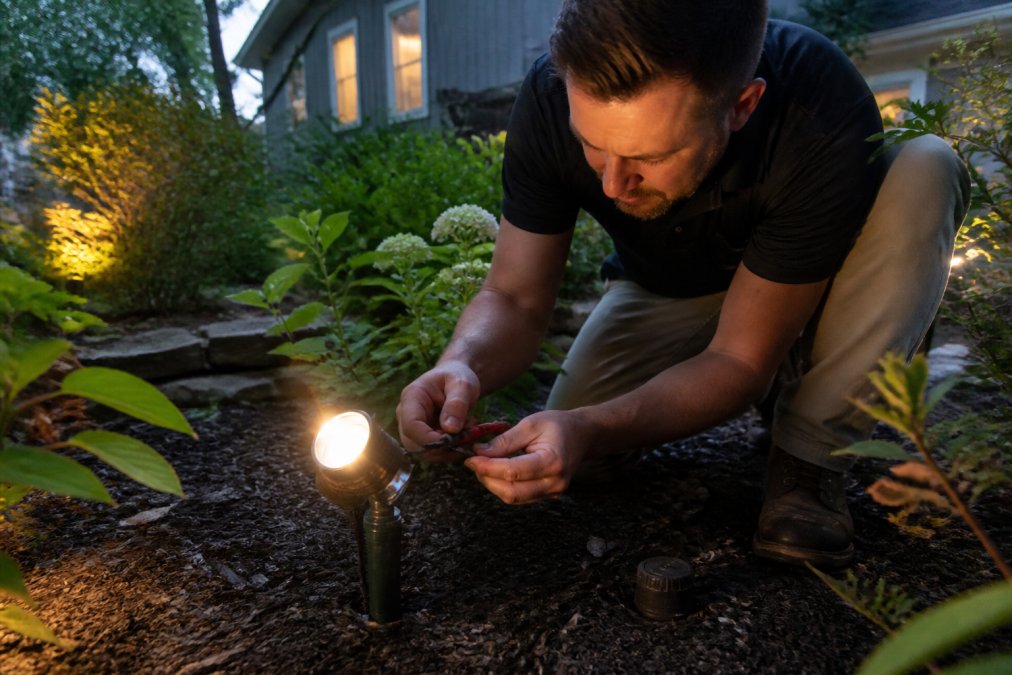
The checklist takes 30-45 minutes for a typical residential system. Keep records of your maintenance inspections, proof of regular maintenance strengthens warranty claims if a component fails.
Troubleshooting Outdoor Lighting Transformers and Common Issues
The transformer is the heart of your low-voltage outdoor lighting system, stepping down household voltage to safe 12V. Understanding common transformer problems helps you identify issues before they become system-wide failures.
Voltage drop is the most common problem. If lights at the end of a long wire run are dimmer than those closer to the transformer, voltage drop is the culprit. Solutions include upgrading to thicker gauge wire, shortening the run, or installing a secondary transformer for distant fixtures.
Driver failure causes complete loss of power to a circuit. Drivers typically last 2-3 years under normal conditions, though outdoor temperature extremes shorten lifespan (peer-reviewed research). Replacement is straightforward, swap the failed driver for an identical unit.
Weatherproofing breakdown allows moisture into the transformer housing, causing corrosion and eventual failure. Proper installation includes a weatherproof cover or mounting location that sheds water.
Loose connections at the transformer create intermittent power loss or complete circuit failure. Wind and thermal expansion can loosen terminal connections over time. Tightening all connectors often restores function.
Grounding issues create safety hazards and can prevent the system from powering on. The transformer must be properly grounded to the electrical panel. This is a job for a licensed electrician.
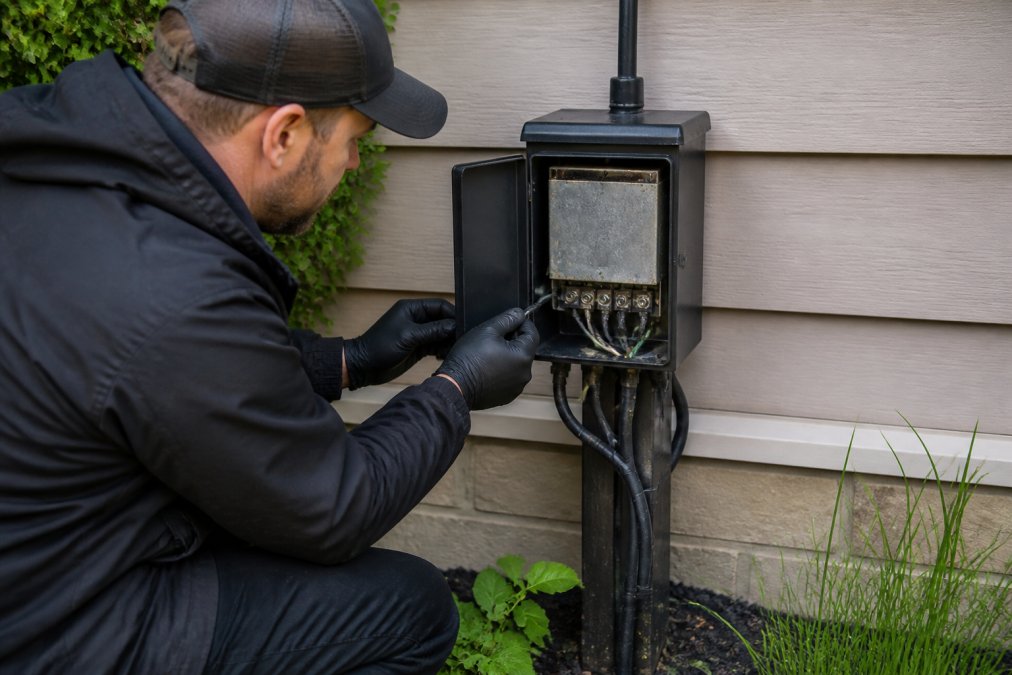
Test the transformer with a multimeter to confirm voltage output. A properly functioning transformer should show approximately 12V across the output terminals. Zero voltage indicates complete failure. Most transformer problems require professional diagnosis and repair.
LED Landscape Lighting Lifespan and Performance Expectations
LED modules are the most durable component of modern outdoor lighting systems. A quality LED landscape lighting fixture should maintain acceptable brightness for 15,000 to 50,000 hours of operation, roughly 10-20 years of typical residential use (peer-reviewed research). However, manufacturers typically guarantee only that LEDs maintain 70% of original brightness for 3-5 years (ies.org). After that, lumen depreciation accelerates.
Your lights won't suddenly stop working after five years, but they will gradually become dimmer. This is normal aging, not a defect. Environmental factors significantly impact LED lifespan, extreme heat shortens driver life, constant moisture accelerates corrosion, and UV exposure degrades lens clarity.
Quality varies substantially between manufacturers. Budget fixtures use cheaper LED modules and drivers that degrade faster. Premium fixtures invest in better thermal management and superior weatherproofing, translating directly to longer lifespan.
Dimming and color consistency also degrade over time. These aren't safety issues, but they affect aesthetic impact. Budget for LED module and driver replacement every 10-15 years for a quality system. The fixture housing often outlasts the electrical components.
How to File a Warranty Claim and What to Expect
Filing a warranty claim requires documentation and following the manufacturer's specific process.
Step 1: Gather documentation. Locate warranty paperwork, proof of purchase, and installation records. Take clear photos of the failed component. Document your maintenance history.
Step 2: Contact the manufacturer. Most manufacturers have a dedicated warranty claim process on their website. Provide your product serial number, purchase date, and detailed description of the failure. Most require claims within 30 days of discovering the defect.
Step 3: Provide evidence. Be specific about what's wrong. Explain exactly what you observe rather than general statements.
Step 4: Expect a decision timeline. Most manufacturers respond within 5-10 business days. They'll either approve the claim and send a replacement part, request additional information, or deny the claim with an explanation.
Step 5: Manage replacement logistics. Approved claims typically result in the manufacturer shipping a replacement part. Installation is usually your responsibility unless you purchased an extended service plan.
What voids claims: lack of maintenance documentation, evidence of improper installation, unauthorized repairs, physical damage unrelated to manufacturing defects, or claims filed outside the warranty period. Warranty coverage doesn't guarantee automatic replacement, the manufacturer must determine that failure resulted from a defect, not misuse or neglect.
DIY Maintenance vs. Professional Service: ROI and Risk
The decision between performing your own maintenance and hiring a professional involves trade-offs between cost, risk, and long-term system health.
DIY Maintenance offers lower immediate cost and hands-on familiarity with your system, but risks improper repair voiding warranty, lacks specialized tools, and may miss subtle problems.
Professional Service provides expert diagnosis, warranty-compliant repairs, proper tools and safety protocols, and comprehensive system optimization, but costs more upfront and requires scheduling coordination.
The financial ROI of professional service becomes clear when considering warranty protection. A single warranty claim denial due to improper DIY repair costs far more than years of professional maintenance. For homeowners comfortable with basic electrical work, performing the annual maintenance checklist yourself is reasonable. However, any actual repairs, driver replacement, transformer repair, or electrical issues should be left to professionals.
Paramount Outdoor Lighting Group recommends a hybrid approach: perform quarterly visual inspections yourself to catch obvious problems, and hire a professional for the comprehensive annual maintenance visit. This catches issues early while ensuring warranty compliance.
Professional service pricing depends on system size and complexity. Budgeting for annual professional service is far cheaper than replacing a failed transformer or dealing with a denied warranty claim. Professional service providers often identify optimization opportunities that enhance your system's performance and longevity.
Outdoor lighting systems are investments in your property's appearance and functionality. Understanding warranty coverage, performing regular maintenance, and knowing when to seek professional help ensures your system operates reliably for years. The warranty is only valuable if you maintain the system properly and follow manufacturer requirements.
At Paramount Outdoor Lighting Group, we work with homeowners to design systems built for longevity and backed by comprehensive warranty coverage. Our team handles installation, maintenance, and warranty support, ensuring your outdoor lighting system performs consistently. Request a walk-through to discuss how proper maintenance and professional service can maximize your system's lifespan and aesthetic impact.
Frequently Asked Questions
How long should outdoor light fixtures last?
Quality outdoor lighting fixtures typically last 10-15 years or longer with proper maintenance. LED modules can deliver 25,000-50,000 hours of operation, though fixture housing, transformers, and electrical components may require replacement sooner depending on environmental exposure and maintenance. Annual inspections help identify wear early and extend system longevity.
What typically voids an outdoor lighting system warranty?
Most outdoor lighting warranties exclude damage from improper installation, lack of preventative maintenance, physical damage, power surges, and environmental factors like extreme weather or salt spray corrosion. Modifications to the system, use of incompatible parts, and failure to register your warranty also commonly void coverage. Review your specific warranty terms to understand exclusions.
How often should professional landscape lighting maintenance be performed?
Annual inspections are recommended to assess fixture performance, check wiring connections, verify voltage drop across the system, and address weatherproofing issues. In harsh climates or coastal areas with salt exposure, semi-annual inspections help prevent corrosion and material failure. Regular maintenance protects your warranty coverage and ensures optimal system performance.
Can I transfer my warranty if I sell my home?
Warranty transferability depends on your specific coverage terms. Some manufacturers offer limited transferability to the next homeowner, while others tie coverage strictly to the original purchaser. Check your warranty documentation or contact the service department before selling. Transferable warranties can increase property appeal and provide peace of mind for new owners.
This article was written using GrandRanker