
8 Creative Ways to Light Up Your Patio
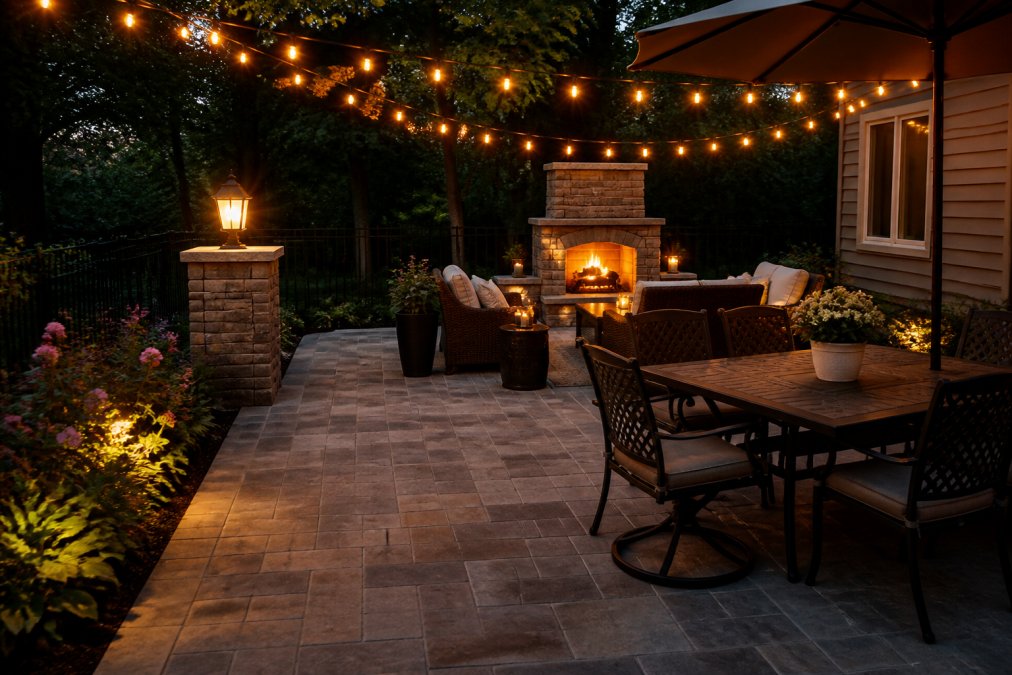
Table of Contents
- String Lights and Fairy Lights for Instant Ambiance
- Solar-Powered Pathway Lighting for Energy-Efficient Elegance
- Wall-Mounted Sconces and Lanterns for Architectural Interest
- How to Choose the Right Color Temperature for Outdoor Lights
- LED Deck and Step Lighting for Safety and Style
- Low Voltage Landscape Lighting Installation Tips
- Layered Lighting Techniques and Best Outdoor Lighting for Ambiance
- Smart Lighting and Automation for Modern Patios
- Frequently Asked Questions
Last Updated: September 19, 2026
String Lights and Fairy Lights for Instant Ambiance
String lights and fairy lights help you light up your patio, transforming any outdoor space into a magical area with warm ambiance perfect for intimate dinners or backyard parties.
Traditional Edison bulbs deliver vintage charm with warm white tones, while fairy lights offer delicate, twinkling effects for a dreamy atmosphere.
Run wires between posts, trees, or overhead structures at 8 to 10 feet above ground. Most systems use standard outlets; solar options eliminate electrical connections.
Warm white lights (2700K) create cozy moods; cool white (4000K) improves visibility for task areas; neutral tones (3000K) balance both.
Solar-Powered Pathway Lighting for Energy-Efficient Elegance
Solar pathway lights eliminate electricity costs and require zero wiring or maintenance. Understanding their technical limitations and operating costs helps you choose the right system for your climate.
How Solar Pathway Lights Work
Solar pathway lights use photovoltaic cells to convert sunlight into electrical energy stored in rechargeable batteries. When ambient light drops below a threshold (typically at dusk), an internal sensor triggers the LED to illuminate. Most units run 8 to 12 hours nightly on a full charge, though runtime decreases in winter months or cloudy climates.
Sunlight Requirements and Placement
Solar lights work best in direct sunlight. Place them in areas that receive at least six hours of unobstructed sun daily. Shaded patios, areas under tree canopies, or north-facing pathways may produce insufficient charge for reliable nighttime operation. Test placement during your sunniest season; winter performance will be noticeably shorter.
For patios with partial shade, consider hybrid systems that combine solar charging with optional hardwired backup, or supplement solar pathway lights with low-voltage LED fixtures in shadowed zones.
Durability Ratings and Material Selection
Quality varies significantly among solar products. Look for fixtures with IP65 or higher weatherproofing ratings, IP65 means dust-tight and protected against water jets from any direction, suitable for most climates. IP67 (submersible to 1 meter) offers extra protection in areas prone to flooding or heavy spray.
Material construction matters for longevity. Stainless steel or powder-coated aluminum bodies resist corrosion better than painted steel. Polycarbonate lenses withstand UV exposure longer than acrylic, which yellows over time. Check product specifications for operating temperature ranges; lights rated for -20°F to 140°F handle seasonal extremes better than those with narrower ranges.
Battery Replacement and Long-Term Costs
Solar pathway lights use rechargeable batteries that degrade over 2 to 3 years; budget $8-$25 per replacement. A hardwired low-voltage system requires no battery replacement and provides consistent brightness year-round.
Installation depends on surface: push stakes into soil; use adhesive-backed bases on concrete and pavers; mount on railings with stainless steel brackets on decks. Space lights 3-4 feet apart for continuous visibility or 6-8 feet to reduce light pollution.
Seasonal Performance Expectations
Solar pathway lights perform best in spring and summer. In winter, expect 40 to 60 percent of summer brightness due to lower sun angles and shorter daylight hours. In northern climates, some users supplement solar lights with battery-powered LED pathway lights during winter months.
Wall-Mounted Sconces and Lanterns for Architectural Interest
Wall-mounted sconces and lanterns add architectural character and practical task lighting. Unlike string lights, they require permanent installation but deliver professional aesthetics and reliable performance.
Sconces come in modern and traditional styles. Choose materials based on climate: stainless steel and aluminum resist corrosion in coastal areas; wrought iron needs protective coating; composite resin is maintenance-free; glass provides diffusion. In salt-spray zones, prioritize 316-grade stainless steel or marine-grade aluminum.
Hardwired sconces require professional installation with dedicated circuits and GFCI protection. Battery-operated sconces offer DIY installation but need battery replacement every 1-3 months. Solar-powered sconces work best on south- or west-facing walls with 6+ hours of direct sun.
Match fixture scale to patio size: small patios (under 200 sq ft) use 8-12-inch sconces with 500-800 lumens; medium (200-400 sq ft) use 12-16-inch with 800-1200 lumens; large (over 400 sq ft) use 16-20-inch with 1200+ lumens. Mount at eye level (60 inches) on either side of doorways, or 72-84 inches on taller walls.
Choose lumens by function: 300-500 for accent lighting, 500-1000 for pathways and entries, 1200+ for task areas. Warm white (2700K) creates intimate atmospheres; cool white (4000K) improves security visibility; neutral white (3000K) balances both.
Installation varies by wall type: stucco and masonry require masonry anchors and sealed junction boxes; vinyl siding needs corrosion-resistant fasteners and caulk; brick offers good support but requires care to avoid cracking; wood is easiest but most vulnerable to water damage. Always use a waterproof gasket between fixture and wall.
Clean fixtures quarterly and check electrical connections annually for corrosion. LED sconces last 25,000-50,000 hours (10-20 years of nightly use) and rarely need replacement.
How to Choose the Right Color Temperature for Outdoor Lights
Color temperature determines whether your patio feels warm and inviting or cool and energetic. This measurement, expressed in Kelvin (K), directly impacts ambiance and mood.
Warm white lights (2700K) create cozy, intimate atmospheres. These tones mimic candlelight and sunset, making spaces feel relaxing and comfortable. Choose warm white for dining areas, seating zones, and entertainment spaces where you want guests to linger. Soft illumination serves as the foundation for well-designed backyard living spaces that transition seamlessly from quiet evenings to lively gatherings.
Cool white lights (4000K) provide crisp, clear visibility. These tones work best for task areas where safety matters, pathways, stairs, and workspace areas. Cool white doesn't create ambiance but maximizes functionality.
Neutral white lights (3000K) offer balance between warmth and clarity. Use neutral tones for spaces serving multiple purposes where you need both ambiance and visibility.
LED Deck and Step Lighting for Safety and Style
LED deck and step lighting combines safety with aesthetic appeal. These low-profile fixtures illuminate stairs and deck edges while adding subtle accent lighting to your outdoor space.
LED technology offers significant advantages. These lights consume minimal energy, last thousands of hours, and produce virtually no heat. They're perfect for areas where people gather frequently.
Deck lights install flush with surfaces or mount on railings. Recessed options sit level with deck boards, creating seamless integration. Rail-mounted fixtures attach to balusters or posts for visibility without surface disruption.
Step lighting prevents accidents by clearly marking elevation changes. Install lights on the edge of each step or on adjacent railings. Aim for 2 to 4 lumens per fixture, enough to see the step without creating glare.
Color temperature for deck lighting should match your patio's overall scheme. Warm white complements entertainment areas. Cool white works better for high-traffic pathways where visibility is paramount.
Most deck lights run on low-voltage systems (12V or 24V) powered by transformers. This safe, efficient approach requires minimal wiring and reduces shock hazard.
Low Voltage Landscape Lighting Installation Tips
Low-voltage landscape lighting offers professional results without complex electrical work. These systems use 12-volt or 24-volt power instead of standard 120-volt circuits, making installation safer and more flexible.
Start by planning your design on paper. Map out light locations, spacing, and desired effects. Identify where you want task lighting, accent lighting, and ambient lighting to work together.
The transformer is your system's heart. This device steps down standard household voltage to safe low-voltage power. Place transformers near outlets and away from water sources. Quality transformers include timer functions and dusk-to-dawn sensors.
Run cable along the path you've planned. Bury wiring 6 inches deep or use conduit to protect from damage. Keep voltage drop in mind, power loss increases with distance. For runs longer than 100 feet, consider upgrading to 24-volt systems.
Connect fixtures to the main cable using weatherproof connectors. Most systems use simple clip-on connections requiring no soldering. Test each connection before burying wires.
Layered Lighting Techniques and Best Outdoor Lighting for Ambiance
Layered lighting creates depth, dimension, and sophisticated ambiance. This professional technique combines multiple light types at different heights and intensities to transform your patio.
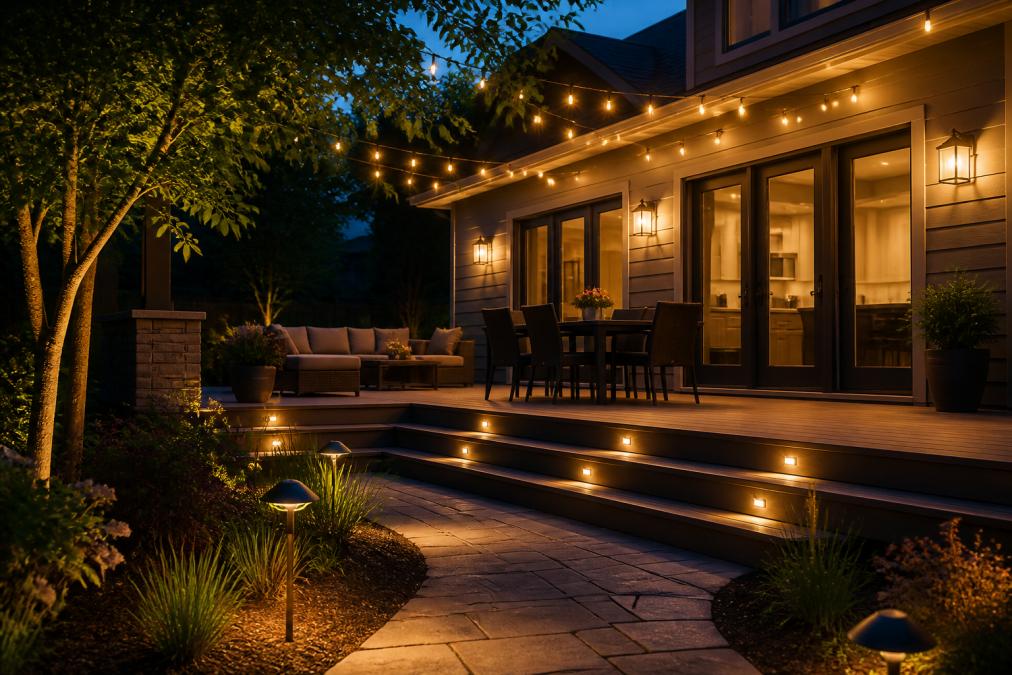
The three-layer approach works best.
Smart Lighting and Automation for Modern Patios
Smart lighting systems let you control your patio lights from anywhere using your phone or voice commands. These systems integrate with home automation platforms for seamless control and scheduling.
Frequently Asked Questions
What color temperature is best for outdoor patio lighting?
Warm white (2700K-3000K) creates a cozy, inviting atmosphere ideal for entertaining and relaxation. Cool white (4000K-5000K) works better for task lighting and security. For patios, most homeowners prefer warm white for ambient lighting combined with cooler tones for functional areas. The right color temperature depends on your patio's purpose and the mood you want to create.
How many lumens do I need for patio lighting?
Lumens required depend on your patio size and lighting type. For ambient lighting, aim for 50-100 lumens per square foot. Task lighting (cooking, dining) needs 100-200 lumens per square foot. A small 100-square-foot patio might need 5,000-10,000 total lumens, while larger spaces require more. Start with lower lumens and adjust upward; overlighting wastes energy and creates harsh shadows.
Are solar lights effective for patio lighting?
Solar pathway lights work well for accent and safety lighting in sunny locations, offering energy-free operation. However, they produce limited lumens and depend on daily sunlight, making them less reliable for ambiance on cloudy days or in shaded patios. For consistent, bright patio lighting, low-voltage hardwired systems or solar-hybrid options provide better performance and reliability than solar-only solutions.
What makes low-voltage lighting systems reliable and safe for residential patios?
Low-voltage systems (12V or 24V) operate at safer voltages than standard 120V, reducing electrical hazards. They use transformers to step down household power, and quality systems include weatherproof components with IP ratings for durability. Professional installation ensures proper voltage drop calculations, secure mounting, and protection from damage. Reputable low-voltage systems include warranties covering equipment and installation workmanship.