
Architectural Lighting for Modern Home Exteriors
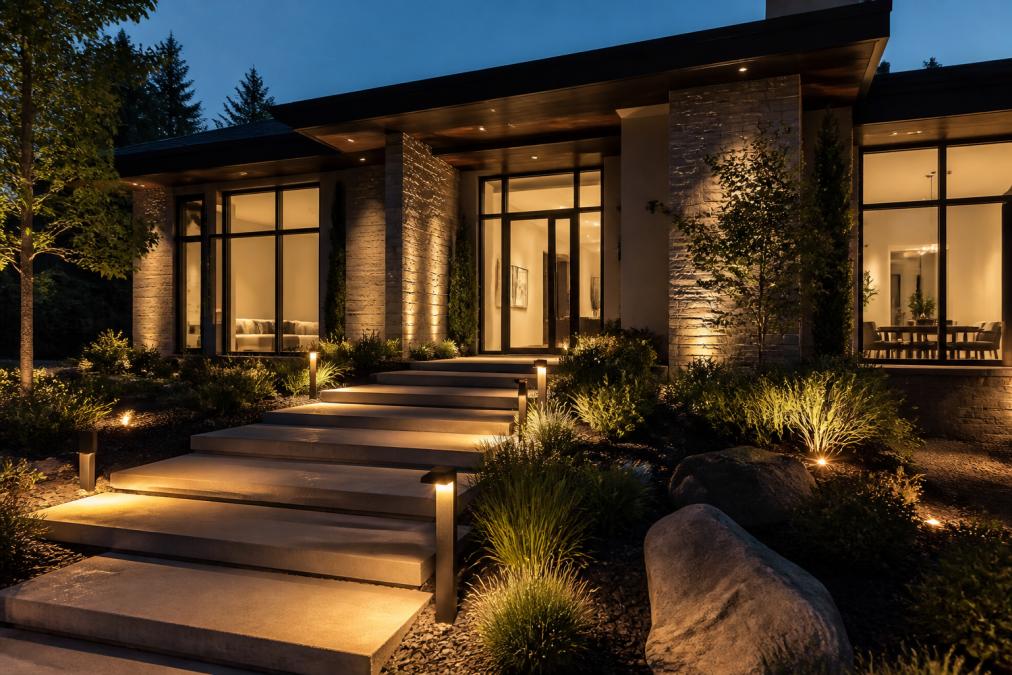
Table of Contents
- What Architectural Lighting Does for Modern Homes
- Best Color Temperature for Outdoor Lighting
- Exterior Lighting Design Techniques That Work
- How to Choose Outdoor Lighting Fixtures
- Smart Lighting and Automation for Modern Exteriors
- Energy Efficiency and LED Integration
- Common Installation Mistakes and How to Avoid Them
- Maintenance and Longevity of Outdoor Fixtures
Last Updated: August 29, 2026
What Architectural Lighting Does for Modern Homes
Architectural lighting strategically highlights your home's best features, creates visual depth, and enhances curb appeal year-round. Unlike decorative outdoor lighting, it defines and celebrates your home's structure, revealing texture, proportion, and architectural detail that daylight obscures. At Paramount Outdoor Lighting Group, we've worked with homeowners who discovered that the right lighting design increases property value, improves security, and transforms how their home looks at night.
Well-designed architectural lighting uses multiple light sources at different angles to create dimension and visual interest. Security improves when pathways and entry points are well-lit, entertaining becomes more enjoyable with layered, controllable lighting, and homes with thoughtful architectural lighting sell faster and command higher prices.
Best Color Temperature for Outdoor Lighting
Color temperature, measured in Kelvin (K), determines whether your outdoor lighting feels warm and inviting or cool and clinical. For most residential architectural lighting, the ideal range is 2700K to 3000K (ies.org). This warm color temperature mimics the golden hour and complements natural materials like stone, brick, and wood, making them appear richer and more textured.
For modern homes with clean lines and contemporary materials, 3500K to 4000K (neutral white) can work beautifully, emphasizing architectural geometry. The key is consistency, mixing multiple color temperatures creates visual confusion rather than sophistication.
Avoid the temptation to use 5000K or higher (daylight white) for residential applications; it strips warmth and makes homes feel institutional. Similarly, going below 2700K can make colors appear muddy and reduce visual clarity.
The best approach is to test samples on your home's actual materials before committing to full installation. Paramount Outdoor Lighting Group recommends a walk-through consultation where we can demonstrate how different color temperatures interact with your specific home's architecture and materials.
Exterior Lighting Design Techniques That Work
Strategic placement and technique separate amateur outdoor lighting from professional architectural design.
Uplighting and Wall Washing
Uplighting creates visual drama by placing fixtures at ground level and directing light upward along a wall or architectural feature. This technique works exceptionally well on stone facades, brick walls, and vertical elements, revealing surface texture and making flat surfaces appear dimensional.
Wall washing evenly illuminates an entire wall surface, revealing color and texture in a flattering, comprehensive way. For modern homes with clean facades, wall washing creates a sophisticated backdrop without dramatic intensity.
Position uplighting fixtures 2 to 4 feet from the base of the wall, angled upward at 45 to 60 degrees. For wall washing, use multiple fixtures spaced evenly to avoid dark patches. Test fixture spacing and intensity before finalizing installation.
Layering Light for Depth and Drama
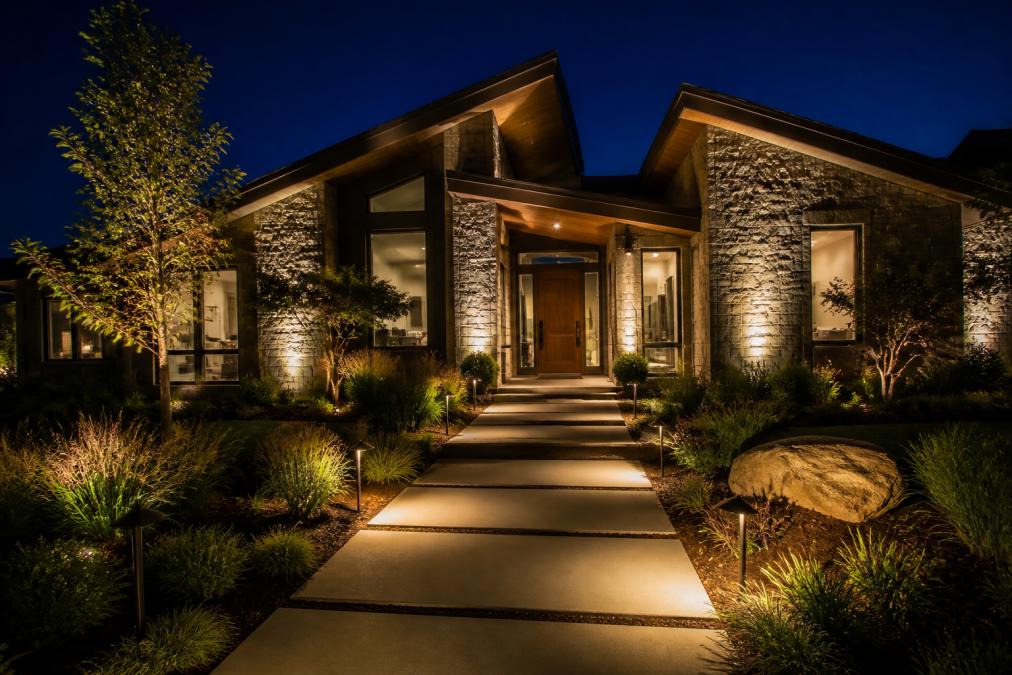
Professional architectural lighting uses multiple light sources at different intensities and angles. Start with a base layer of ambient light for general illumination. Add an accent layer using brighter, directional fixtures to highlight specific architectural features. Finally, consider a task layer for functional areas like entryways or patios.
This layering creates visual interest and guides the viewer's eye toward your home's best features while maintaining balance and sophistication.
Pathway and Entryway Illumination
Pathways serve both functional and aesthetic purposes. For modern homes, consider low-profile pathway lights that don't visually compete with your home's architecture. Recessed pathway lights, bollard lights, or low-level LED fixtures create subtle illumination while guiding movement.
Entryway lighting deserves special attention as the first impression visitors form at night. A well-lit entryway should feature layered lighting: ambient light from overhead or wall-mounted fixtures, accent lighting on architectural details, and task lighting for safe entry. Warm color temperature is almost always appropriate here, conveying welcome and hospitality.
How to Choose Outdoor Lighting Fixtures
Selecting the right fixtures involves balancing aesthetic preferences with practical performance requirements.
Durability and Weather Resistance
Outdoor fixtures must withstand temperature fluctuations, moisture, and UV exposure. Look for fixtures with an IP rating of at least IP65, which indicates protection against water jets and dust (iec.ch).
Material selection is equally important. Fixtures made from marine-grade stainless steel, aluminum, or powder-coated steel resist corrosion far better than cheaper alternatives. Quality fixtures use UV-resistant lens and diffuser materials that don't yellow or become brittle under sun exposure.
Minimalist Design and Fixture Placement
Modern architectural lighting favors minimalist fixture design that doesn't distract from your home's architecture. The fixture should disappear at night, leaving only the light visible. For most modern homes, fixtures in matte black, bronze, or stainless steel finishes work best. luxury outdoor living.
Fixture size should be proportional to the area being illuminated. Hide fixtures where possible, in planting beds, behind architectural elements, or recessed into walls or soffits. This approach requires careful planning but produces infinitely more sophisticated results.
Smart Lighting and Automation for Modern Exteriors
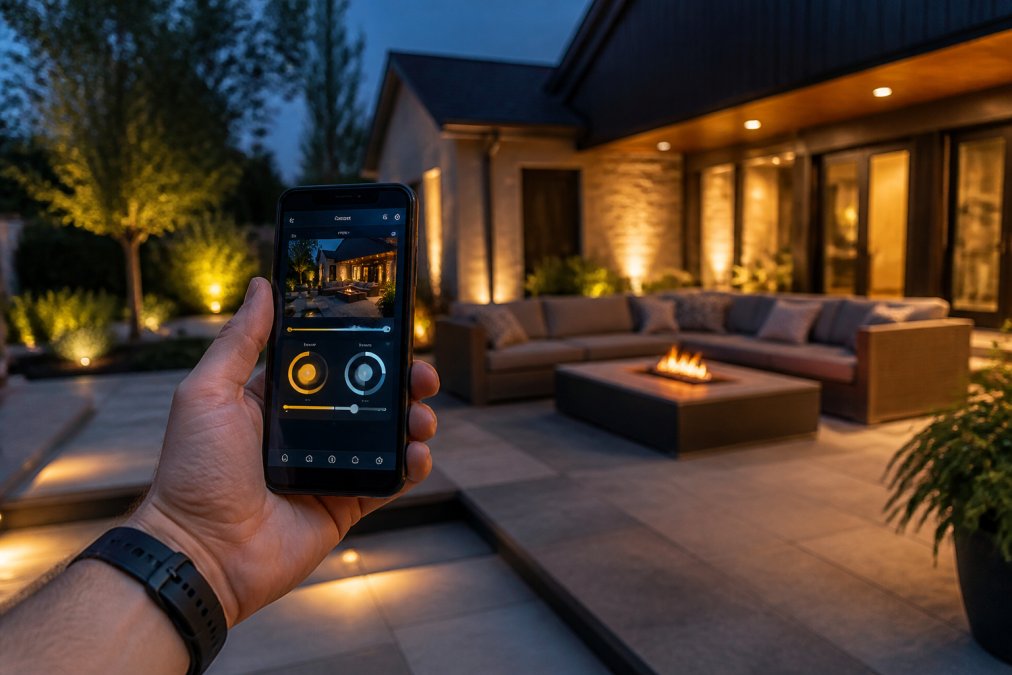
Smart lighting systems allow you to adjust brightness, color temperature, and on/off schedules based on time of day, season, or specific occasions. Low-voltage LED systems integrate easily with smart home platforms, enabling you to program lights to turn on at dusk, adjust brightness based on ambient light sensors, or create custom scenes for entertaining.
Motion detection sensors activate pathway lighting only when needed, reducing energy consumption while maintaining security. Integration with existing smart home systems (Apple HomeKit, Google Home, Amazon Alexa) means you can control outdoor lighting from anywhere, simulating occupancy when traveling or adjusting lighting for events.
Energy Efficiency and LED Integration
LED technology has transformed outdoor lighting into an efficient, cost-effective solution. Modern LEDs consume 75-80% less energy than traditional incandescent or halogen bulbs while producing superior light quality and lasting 25,000+ hours (energy.gov).
For architectural lighting, LEDs offer additional advantages: they generate minimal heat, are available in precise color temperatures, and are durable solid-state technology with no filaments to break. The upfront cost has dropped significantly, making them competitive with traditional technology even before accounting for energy savings.
When selecting LED fixtures, look for warm white LEDs (2700K-3000K) that provide flattering light without the yellowish cast of older LED technology. Modern warm white LEDs render colors accurately and create sophisticated ambiance with dramatically better efficiency and longevity.
Common Installation Mistakes and How to Avoid Them
Professional installation matters more than most homeowners realize. Common mistakes include inadequate spacing between fixtures (creating dark patches or wasted energy), ignoring beam spread and light distribution, poor wire management and connection quality, inadequate voltage and circuit design, and failing to account for seasonal changes.
Proper spacing depends on fixture type, beam spread, and mounting height, factors requiring calculation and testing. Low-voltage systems require proper transformer sizing and wire gauge to deliver consistent power. A professional designer calculates voltage requirements and designs circuits to maintain consistent brightness across all fixtures.
A well-designed system accounts for seasonal variations, as light behaves differently depending on the season. Bare branches in winter allow light to penetrate areas that summer foliage blocks.
Maintenance and Longevity of Outdoor Fixtures
LED fixtures require minimal maintenance compared to traditional lighting. However, fixtures need periodic cleaning, dust, pollen, and debris accumulate on lenses and diffusers, reducing light output. A soft cloth and mild soap solution clean most fixtures effectively.
Electrical connections require occasional inspection, as corrosion at connection points causes voltage drop and flickering. Wiring in direct soil contact can degrade over time; professional installations typically use conduit or burial-rated wire for protection.
Smart lighting systems require software updates to maintain security and performance. The lifespan of quality architectural lighting fixtures typically ranges from 15-25 years with proper maintenance. Paramount Outdoor Lighting Group recommends scheduling annual maintenance checks, particularly before seasons of heavy use, to identify potential issues before they become problems.
Architectural lighting for modern home exteriors is an investment in both aesthetics and functionality. The right design enhances your home's architecture, improves security, and creates outdoor spaces you'll enjoy for years. Achieving professional results requires understanding color temperature, design techniques, fixture selection, and proper installation, expertise that separates exceptional outdoor lighting from mediocre attempts.
Paramount Outdoor Lighting Group specializes in custom architectural lighting design and professional installation. Our team assesses your home's unique architecture, selects fixtures that complement your style, and creates a lighting system that enhances your property's appearance while maintaining reliability and efficiency. Request a walk-through consultation to see how architectural lighting can transform your home's exterior and increase your property's curb appeal and value.
Frequently Asked Questions
What color temperature is best for modern home exteriors?
For modern homes, 2700K to 3000K creates a warm, welcoming ambiance while maintaining contemporary aesthetics. This kelvin range complements minimalist design without appearing overly yellow. For task lighting in entryways or patios, 3000K to 4000K provides better visibility. Avoid anything above 5000K for residential exteriors, it reads as cold and institutional. Your choice depends on your home's architectural style and the mood you want to establish.
How do you highlight architectural features with lighting?
Uplighting and wall washing are the most effective techniques. Position low-voltage fixtures at ground level, angled upward at 30-45 degrees to graze stone, brick, or siding and create shadow play that emphasizes texture. For accent lighting on specific features like columns or roof lines, use focused beam spreads to draw the eye. Avoid over-lighting, subtle architectural silhouettes often create more impact than bright, obvious illumination. Fixture placement should be strategic and largely invisible during the day.
What's the difference between architectural lighting and landscape lighting?
Architectural lighting emphasizes the structure itself, facades, entryways, rooflines, and exterior materials. Landscape lighting highlights plants, pathways, and hardscape elements like driveways or patios. Modern exterior design often combines both: architectural uplighting on the house paired with pathway illumination and accent lighting on landscaping. The goal is cohesive curb appeal where the house and grounds work together. Most contemporary designs integrate both disciplines for layered depth and visual interest.
How do I know if outdoor fixtures will last through the seasons?
Look for fixtures with IP ratings of IP65 or higher, this indicates protection against dust and water jets, critical for weather resistance. Check materials: aluminum, stainless steel, and marine-grade brass resist corrosion. LED fixtures last significantly longer than incandescent or halogen equivalents, often 25,000-50,000 hours or more. Low-voltage systems are more durable than line-voltage installations because they run cooler and put less stress on connections. Request warranty details from your installer, reputable providers back their work and materials.
This article was written using GrandRanker