
Is Architectural Lighting Subtle or Fake Looking?
Table of Contents
- The Fake vs. Subtle Spectrum in Architectural Lighting
- Understanding Lighting Layers and Hierarchy
- How to Light a Brick House Exterior at Night
- Architectural Lighting Design Techniques for Natural Results
- LED Color Temperature for Home Exteriors
- Common Lighting Design Mistakes That Create Fake-Looking Results
- Balancing Functionality and Aesthetic Appeal
Last Updated: August 26, 2026
The Fake vs. Subtle Spectrum in Architectural Lighting
The distinction between subtle and fake-looking architectural lighting comes down to restraint paired with intentionality. When done well, architectural lighting enhances a property's character without announcing itself. When done poorly, it screams for attention and creates an artificial, theatrical quality disconnected from the space.
The real skill lies in understanding where your project should land on the spectrum. A brick home with mature landscaping calls for a different approach than a modern minimalist residence. The fake-looking result typically happens when someone applies the wrong strategy to the wrong property, or when they simply add too much light without considering how it interacts with the built environment. At Paramount Outdoor Lighting Group, we design exterior lighting schemes, and the projects that stand out are the ones where the lighting feels inevitable rather than imposed.
Understanding Lighting Layers and Hierarchy
Architectural lighting works best when it operates in layers. The foundation of good design is understanding three primary layers: ambient lighting (overall visibility and mood), task lighting (functional purposes like pathways and entrances), and accent lighting (drawing attention to specific features).
The mistake most people make is treating these layers as separate systems rather than an integrated whole. They add ambient light everywhere, then layer on accent lights, then add task lighting, and suddenly the space drowns in illumination. Proper layering means being selective. You might use subtle ambient light to establish mood, then deploy accent lighting strategically to create focal points. The gaps between these layers, areas of relative darkness, create depth and drama. Without shadow and contrast, everything flattens into uniform brightness that reads as fake.
Color temperature consistency is critical. Mixing warm and cool light sources creates visual confusion and that artificial, disconnected feeling. A brick home lit with warm 2700K light feels cohesive and intentional. The same home lit with a mix of 2700K and 5000K light sources looks disjointed and poorly planned.
How to Light a Brick House Exterior at Night
Brick presents a unique opportunity in architectural lighting because the texture is inherently interesting. The most effective approach is uplighting placed low and close to the foundation, creating a wash of light that emphasizes mortar lines and brings out the three-dimensional quality of the masonry. The key is restraint: the light should be just bright enough to define texture without turning the wall into a glowing surface.
Placement matters enormously. Lights set too far from the wall create a broad, uniform wash that flattens the brick. Lights positioned close to the foundation and angled upward create a more dramatic, intentional effect. Spacing them too far apart creates visible hot spots; spacing them too close wastes resources.
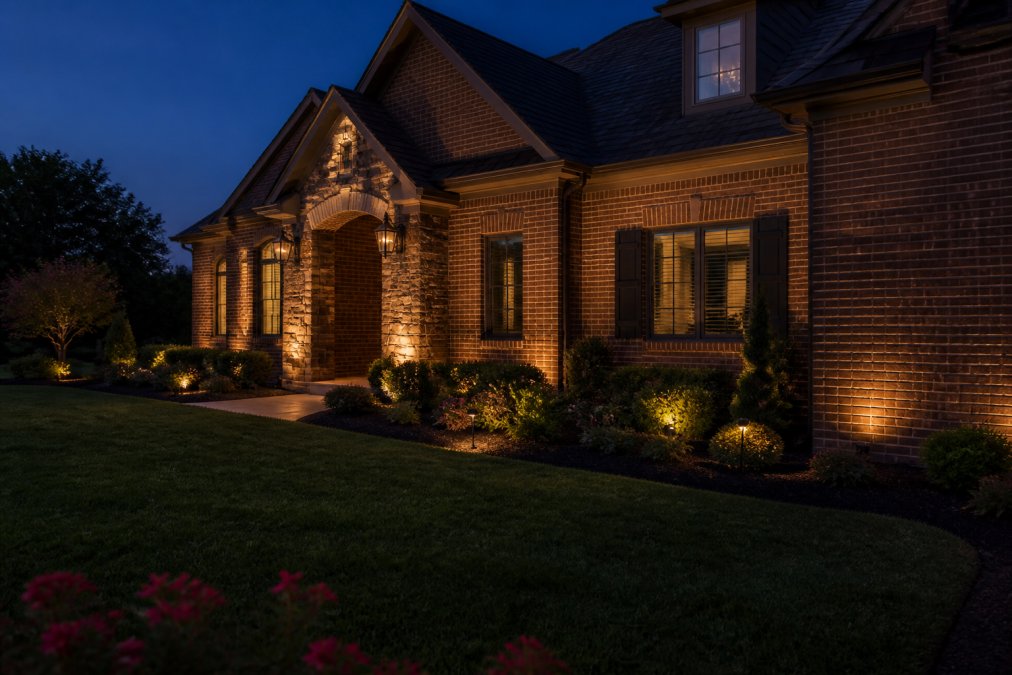
For brick homes with architectural features, accent lighting on a stone entryway or decorative trim adds visual interest without requiring additional overall illumination. The accent light draws the eye to what matters most while allowing the rest of the facade to remain in relative darkness. Well-designed architectural lighting on brick actually looks more natural than no lighting at all, because it mimics how sunlight would interact with the texture. LED fixtures have made this approach more accessible and efficient, allowing precise dimming and positioning close to masonry without heat concerns.
Architectural Lighting Design Techniques for Natural Results
The techniques that produce natural-looking results share common principles.
Layered illumination with intentional gaps. The spaces between lit areas matter as much as the lit areas themselves. A space where light and shadow create visual rhythm feels natural and sophisticated.
Appropriate color temperature and CRI. For residential exteriors, 2700K to 3000K is standard and feels welcoming (ies.org). CRI (Color Rendering Index) of 90 or above makes materials look authentic (ies.org). Low CRI light makes everything look slightly wrong.
Shadow and contrast as design elements. Strategic use of shadow creates depth and visual interest. This separates professional design from amateur attempts.
Fixture selection and positioning. Fixtures should blend into the architecture rather than announce themselves. Low-voltage LED systems allow for smaller, more discreet fixtures.
Avoiding light pollution and glare. Fixtures should be positioned so light goes where intended and stops there. Proper placement eliminates glare and creates a refined appearance.
LED Color Temperature for Home Exteriors
LED color temperature for home exteriors should typically fall between 2700K and 3000K (energy.gov). This warm range feels inviting and natural, complements most residential architecture, and creates the feeling of extended daylight rather than artificial nighttime illumination.
The problem occurs when designers mix color temperatures. A 2700K uplighting combined with 4000K accent lighting creates visual discord. The eye perceives the inconsistency as a design flaw. For residential exteriors, 2700K to 3000K strikes the right balance between warmth and visibility.
CRI matters equally. A 2700K light with CRI of 70 makes brick look dull; the same 2700K light with CRI of 95 makes brick look rich. For architectural lighting, specify CRI of 90 or higher. Dimming capability adds another layer of control, letting you adjust intensity based on conditions or mood. value of designer lighting.
Common Lighting Design Mistakes That Create Fake-Looking Results
Certain mistakes appear repeatedly in poorly designed architectural lighting.
Uniform brightness everywhere. Lighting the entire exterior evenly creates a flat, artificial appearance. Natural lighting creates variation in brightness, some areas bright, others in shadow. This variation creates depth and visual appeal.
Too much light overall. More light is not better. A common instinct is to add brightness until everything is clearly visible. The result is an overlit space that feels harsh and artificial. Professional designs use light strategically to highlight what matters.
Mismatched color temperatures. Mixing warm and cool light sources creates visual confusion. A 2700K uplighting paired with 5000K accent lighting looks disjointed.
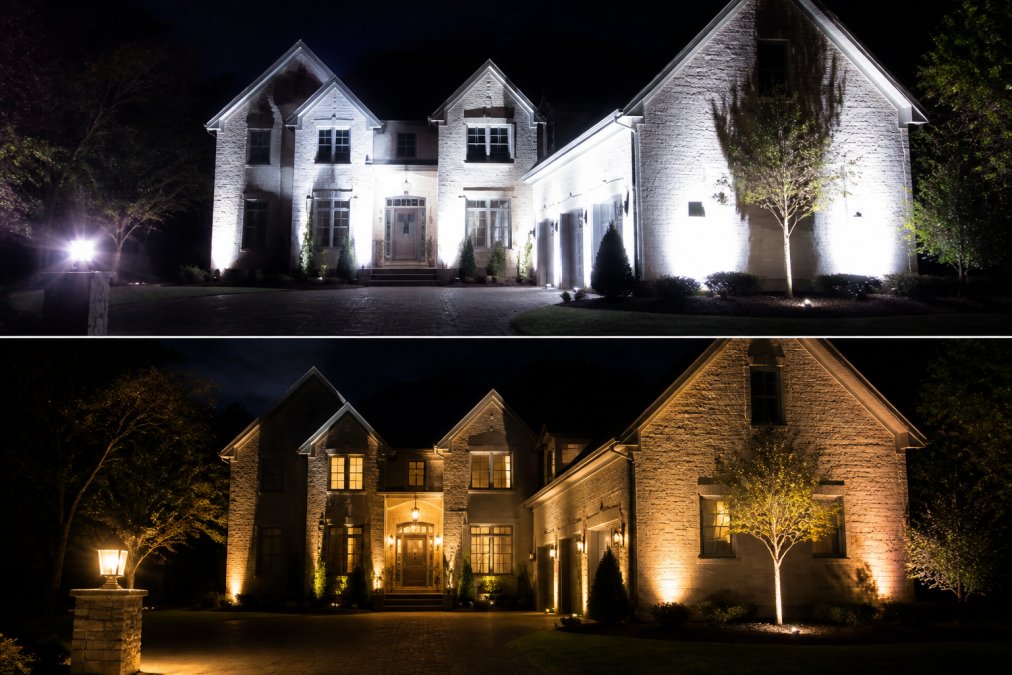
Fixtures that announce themselves. Visible light fixtures create a disconnected, artificial aesthetic. Fixtures should be hidden from typical viewing angles so light appears to come from nowhere obvious.
Ignoring the existing architecture. Each property has its own character. Lighting design should enhance that character rather than impose a generic template. A modern minimalist home calls for different lighting than a traditional brick colonial.
Inadequate maintenance planning. Fixtures that accumulate dirt and debris stop performing as designed. A good lighting design includes a maintenance plan that keeps the system performing as intended.
Balancing Functionality and Aesthetic Appeal
The best architectural lighting systems serve both function and aesthetics. They make spaces usable while also making them beautiful.
Functional requirements typically include visibility for safety, illumination for specific tasks, and security lighting. Aesthetic goals include highlighting architectural features, creating visual interest, establishing mood, and enhancing curb appeal. The mistake is treating these as competing priorities.
The best designs integrate them seamlessly. A front entrance lit for safety can also highlight architectural details of the entryway. A pathway illuminated for safety can be lit to create visual rhythm. A patio lit for function can be designed to create an inviting atmosphere. This integration requires intentional design thinking and understanding what the space needs to accomplish.
Color temperature, intensity, fixture type, and positioning all contribute to this balance. A 2700K uplighting on a brick wall serves aesthetic purposes while providing ambient visibility. Accent lighting on architectural features serves aesthetics while helping visitors orient themselves. Task lighting serves functional purposes while creating visual interest.
When evaluating lighting proposals, look for evidence of this integration. Does the design address functional requirements while creating visual interest? Does it enhance the property's character rather than impose a generic aesthetic? Does it use light strategically rather than universally? These questions help distinguish between designs that will look natural and those that will read as artificial.
Paramount Outdoor Lighting Group approaches every project with this integration in mind. The lighting systems we design serve both function and aesthetics, creating spaces that work well and look intentional.
The question of whether architectural lighting looks subtle or fake ultimately comes down to design philosophy and execution. Properties lit with intention, where every fixture serves a clear purpose, where color temperature is consistent, and where light and shadow work together to create visual hierarchy, look professional and refined. The difference isn't about spending more money or installing more fixtures. It's about understanding principles and applying them thoughtfully.
If you're considering architectural lighting for your property and want to ensure the result looks natural and intentional rather than artificial or over-lit, a consultation with experienced designers can clarify your options. Request a walk-through with Paramount Outdoor Lighting Group to see how professional lighting design can enhance your property's character while meeting your functional needs.
=== FAQ ANSWERS (audit these too, same rules) ===
[1] Q: How do you avoid a fake or over-lit look with exterior architectural lighting? A: The key is restraint and layering. Avoid washing your entire facade with bright light, instead, use accent lighting to highlight specific architectural features like columns, stonework, or entryways. Layer ambient, task, and accent lighting at different intensities. Choose warm color temperatures (2700K-3000K) that mimic natural light. Position fixtures to create shadow and contrast rather than flat illumination. Professional designers often use dimming controls to adjust intensity based on time of night, creating a more natural progression from dusk to full darkness.
[2] Q: What is the difference between architectural lighting and decorative lighting? A: Architectural lighting is designed to enhance the built environment's structural and aesthetic qualities, highlighting materials, textures, and form while serving a functional purpose. It works with your home's existing design. Decorative lighting is purely ornamental, often standing out as an added feature. Architectural lighting integrates seamlessly into your property's character, while decorative lighting draws attention to itself. Subtle architectural lighting respects the home's proportions and materials, whereas over-the-top decorative approaches can feel forced or artificial.
[3] Q: Can architectural lighting be adjusted for different times of night? A: Yes, and this is crucial for achieving subtle results. Dimming controls and programmable lighting systems allow you to reduce intensity as the evening progresses, mimicking the natural transition from twilight to full darkness. Many professional installations include smart controls that automatically adjust brightness and color temperature throughout the night. This prevents the harsh, artificial appearance that comes from static, full-brightness lighting. Adjustable systems also reduce light pollution and energy consumption while maintaining visual comfort and security.
[4] Q: Does architectural lighting increase property value? A: Yes, well-designed architectural lighting enhances curb appeal and can positively influence property perception and value. Professional exterior lighting demonstrates attention to detail and investment in the home's aesthetics and security. It extends the usable outdoor spaces into evening hours, which appeals to buyers. However, the increase depends on design quality, subtle, professional lighting adds value, while poorly executed or overly bright systems may detract from it. The key is ensuring the lighting complements your home's architecture rather than overwhelming it.
Frequently Asked Questions
Q: How do you avoid a fake or over-lit look with exterior architectural lighting?
A: The key is restraint and layering. Avoid washing your entire facade with bright light, instead, use accent lighting to highlight specific architectural features like columns, stonework, or entryways. Layer ambient, task, and accent lighting at different intensities. Choose warm color temperatures (2700K-3000K) that mimic natural light. Position fixtures to create shadow and contrast rather than flat illumination. Professional designers often use dimming controls to adjust intensity based on time of night, creating a more natural progression from dusk to full darkness.
Q: What is the difference between architectural lighting and decorative lighting?
A: Architectural lighting is designed to enhance the built environment's structural and aesthetic qualities, highlighting materials, textures, and form while serving a functional purpose. It works with your home's existing design. Decorative lighting is purely ornamental, often standing out as an added feature. Architectural lighting integrates seamlessly into your property's character, while decorative lighting draws attention to itself. Subtle architectural lighting respects the home's proportions and materials, whereas over-the-top decorative approaches can feel forced or artificial.
Q: Can architectural lighting be adjusted for different times of night?
A: Yes, and this is crucial for achieving subtle results. Dimming controls and programmable lighting systems allow you to reduce intensity as the evening progresses, mimicking the natural transition from twilight to full darkness. Many professional installations include smart controls that automatically adjust brightness and color temperature throughout the night. This prevents the harsh, artificial appearance that comes from static, full-brightness lighting. Adjustable systems also reduce light pollution and energy consumption while maintaining visual comfort and security.
Q: Does architectural lighting increase property value?
A: Yes, well-designed architectural lighting enhances curb appeal and can positively influence property perception and value. Professional exterior lighting demonstrates attention to detail and investment in the home's aesthetics and security. It extends the usable outdoor spaces into evening hours, which appeals to buyers. However, the increase depends on design quality, subtle, professional lighting adds value, while poorly executed or overly bright systems may detract from it. The key is ensuring the lighting complements your home's architecture rather than overwhelming it.
This article was written using GrandRanker