
Solar vs Hardwired Outdoor Lighting: Pros and Cons
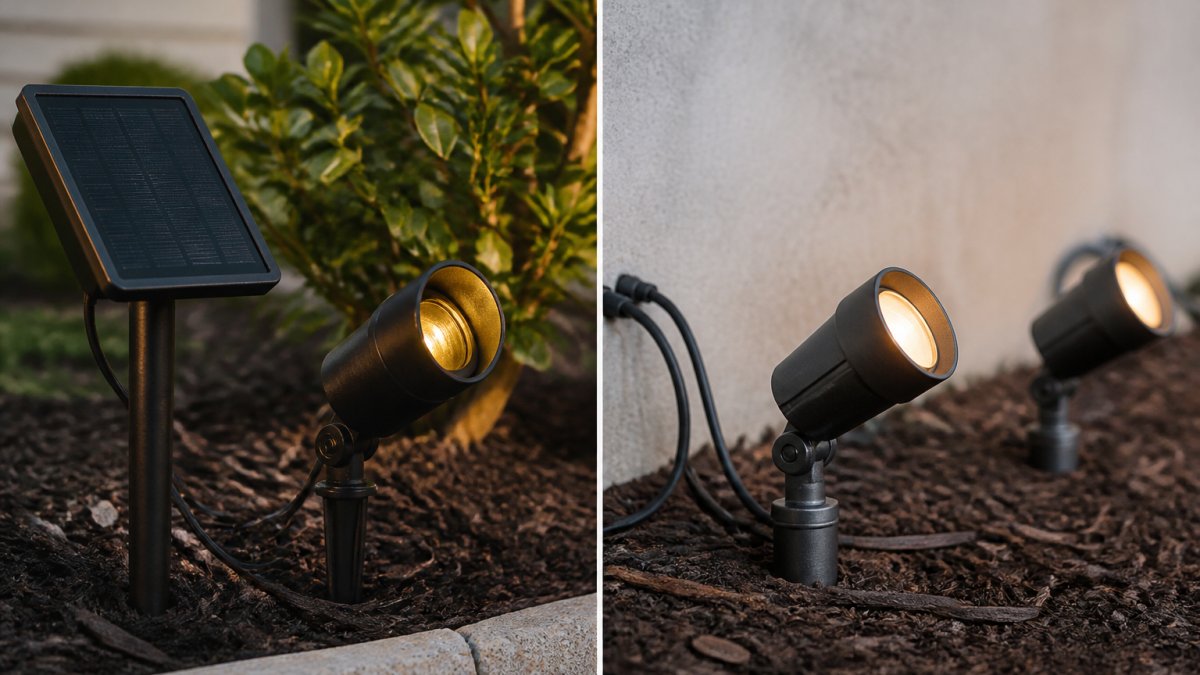
Table of Contents
- Solar Versus Hardwired Outdoor Lighting: Overall Comparison
- Pros and Cons of Solar Outdoor Lighting
- Pros and Cons of Hardwired or Low-Voltage Lighting
- Solar vs Low-Voltage Landscape Lighting: Installation and Wiring
- Outdoor Lighting Cost Comparison: Upfront and Ongoing Expenses
- Landscape Lighting Brightness and Coverage: Solar Pathway Lights Versus Hardwired Systems
- Battery Replacement, Maintenance, and Long-Term Durability
- Electrical Safety, Codes, and Hybrid Smart Controls
- Frequently Asked Questions
Last Updated: October 10, 2026
Solar Versus Hardwired Outdoor Lighting: Overall Comparison
When evaluating solar vs hardwired outdoor lighting, your choice depends on site conditions, budget, and performance expectations.
Solar pathway lights require no wiring or trenching and charge during daylight hours. Hardwired systems connect to your home's electrical grid or transformer, delivering consistent brightness regardless of weather or season. The trade-off: solar wins on installation simplicity, hardwired systems on predictable performance.
Your site conditions, budget, and performance needs determine which system makes sense. Some properties benefit from a hybrid approach combining both technologies.
Understanding the real differences between solar vs hardwired outdoor lighting helps you avoid costly mistakes. Many homeowners find solar systems dim in winter or fail in shade, while others underestimate hardwired installation complexity and cost.
Pros and Cons of Solar Outdoor Lighting
Solar pathway lights require zero electrical work and no ongoing electricity costs. Setup takes minutes, stake them in the ground and they charge during the day.
Solar lights dim significantly in shade and cloudy weather. Tree canopies and north-facing locations reduce charging and runtime. Winter daylight is 40% shorter, limiting operation. Batteries degrade in 2-3 years.
Solar pathway lights output 20-50 lumens, enough to mark a path but insufficient for security or patio lighting. Output drops further as batteries age.
Pros of solar outdoor lighting:
- No trenching, wiring, or electrical work required
- Zero electricity costs once installed
- Easy to relocate or remove
- No permits or code compliance concerns
- Low upfront equipment costs
- Ideal for renters or temporary installations
Cons of solar outdoor lighting:
- Minimal brightness compared to hardwired systems
- Unreliable in shade or cloudy climates
- Winter performance is severely limited
- Battery replacement needed every few years
- Inconsistent illumination as batteries age
- Not suitable for security or accent lighting needs
Pros and Cons of Hardwired or Low-Voltage Lighting
Hardwired systems deliver consistent, bright illumination regardless of weather, season, or shade. Once installed, they operate reliably for 15+ years with minimal maintenance.
Low-voltage landscape lighting uses a transformer to step down 120V to 12V, making installation safer with smaller wiring. It's the standard for professional installations.
Installation requires trenching, drilling, and permits. Upfront costs are higher for wire, transformer, fixtures, and labor. The system draws electricity continuously, adding to utility bills.
Pros of hardwired or low-voltage lighting:
- Bright, consistent illumination every night
- Performs reliably in shade and cloudy weather
- Works equally well in winter and summer
- Long fixture lifespan (15-25 years)
- Supports accent lighting, security lighting, and decorative effects
- Professional appearance and design flexibility
- No battery replacement needed
Cons of hardwired or low-voltage lighting:
- Requires trenching and wiring installation
- Higher upfront equipment and labor costs
- May require electrical permits and inspections
- Adds to monthly electricity bill
- Difficult to relocate once installed
- Requires professional installation for code compliance
Solar vs Low-Voltage Landscape Lighting: Installation and Wiring
Solar pathway lights stake into the ground in minutes with no tools, planning, or permits.
Low-voltage installation takes days or weeks, involving trenching, running cable, and testing connections. Professional installation is essential, DIY trenching often causes wire damage or connection failures.
Solar lights are wireless and independent. Low-voltage systems are interconnected, one bad connection affects multiple fixtures. The transformer must be grounded and protected; buried wire must be rated for direct burial at correct depth.
Most jurisdictions require low-voltage landscape lighting installed by a licensed electrician with permits often mandatory. Solar installations have no code requirements.
Solar favors renters and temporary setups; hardwired systems favor permanent installations requiring reliable performance.
Outdoor Lighting Cost Comparison: Upfront and Ongoing Expenses
Solar pathway lights cost less upfront and install in an afternoon.
Hardwired systems cost more upfront for transformer, wire, fixtures, labor, and permits, but spread over 15-20 years of operation.
Solar systems draw no power; hardwired systems draw power continuously during darkness. Operating costs are modest and predictable.
Solar batteries degrade after 2-3 years, requiring replacement every few years. Hardwired systems never need battery service.
Solar lights cost less initially but may be replaced in 5-10 years. Hardwired systems cost more upfront but operate 15-20 years with minimal maintenance, often favoring hardwired systems on total cost of ownership.
Landscape Lighting Brightness and Coverage: Solar Pathway Lights Versus Hardwired Systems
Solar pathway lights produce 20-50 lumens, enough to mark a path but insufficient for patios, architectural accents, or security lighting.
Hardwired landscape lighting fixtures range from 100 lumens for subtle accent lights to 500+ lumens for security or feature lighting. A typical hardwired pathway light produces 150-300 lumens, significantly brighter than solar equivalents. Accent lights can highlight trees, architectural details, or landscape features with dramatic effect.
Light Output and Lumens
Lumens measure brightness. Higher lumens mean brighter light. Solar pathway lights typically produce 20-50 lumens. Hardwired landscape lights produce 100-500 lumens depending on fixture type and wattage. The difference is visible and dramatic in real conditions.
A solar pathway light creates a small pool of light directly around the fixture. You see the light is there, but it doesn't illuminate much space. A hardwired pathway light illuminates a wider area, making it safer and more visible from a distance. For accent lighting, the difference is even more pronounced. Solar accent lights barely visible from across a yard. Hardwired accent lights can illuminate an entire tree or architectural feature with professional-looking results.
Performance in Shade and Cloudy Weather
This is where solar systems struggle most. A solar panel in full sun charges fully. A solar panel in partial shade charges at 25-50% capacity. A solar panel under a tree canopy charges at 10-25% capacity. The battery stores whatever energy the panel collected. If the panel is shaded, the battery doesn't charge fully, and the light runs at reduced brightness or dies before midnight.
Winter performance is similarly problematic. December daylight hours are 40% shorter than June daylight hours. Solar panels receive less direct sun angle. Cloudy weather reduces charging further. Many homeowners find their solar lights barely functional in winter, especially in northern climates.
Hardwired systems ignore these conditions. They draw power from the grid, not the sun. Shade doesn't affect them. Winter doesn't affect them. Cloudy weather doesn't affect them. They illuminate identically every night regardless of season or weather.
If your property has mature trees, north-facing areas, or a climate with frequent cloud cover, solar systems will underperform. Hardwired systems deliver consistent results in those conditions.
Battery Replacement, Maintenance, and Long-Term Durability
Solar light batteries degrade predictably. Most solar pathway lights use rechargeable lithium or NiMH batteries rated for 300-500 charge cycles. That's roughly 1-2 years of daily use. After 2-3 years, the battery holds less charge, the light dims, and runtime shortens. Eventually, the battery fails completely.
Replacing solar light batteries costs between per light. If you have 10 solar pathway lights, battery replacement every 3 years costs between. Over 15 years, you'll replace batteries 4-5 times, spending hundreds on maintenance.
Hardwired system maintenance is minimal. The wire lasts 25+ years if properly installed. LED fixtures last 15-25 years. The transformer lasts 20+ years. There are no batteries to replace. You might replace a damaged fixture or repair a wire connection, but these are rare if the system was installed professionally.
Weather resistance differs between systems. Solar lights are exposed to sun, rain, and temperature extremes. The plastic housing degrades under UV exposure. Many solar lights become brittle and crack after 5-7 years. Hardwired fixtures are designed for long-term outdoor exposure. Quality fixtures are made from corrosion-resistant materials and rated for 20+ years of weather exposure.
Durability favors hardwired systems significantly. A solar pathway light might last 5-10 years before failure. A hardwired landscape light lasts 15-25 years. The hardwired system is more durable and requires less maintenance over its lifespan.
Electrical Safety, Codes, and Hybrid Smart Controls
Electrical safety is why hardwired systems require professional installation and permits. Your home's electrical panel and main service are dangerous. Improper installation can create fire hazards or electrocution risks.
Solar systems have no electrical safety concerns. They're not connected to the electrical grid. The batteries are low-voltage DC power. There's no shock hazard or fire risk from improper installation. This is one genuine advantage for DIY installations.
Local electrical codes vary by jurisdiction. Most areas require low-voltage landscape lighting to be installed by a licensed electrician or a contractor with specific landscape lighting credentials. Permits are often mandatory. Your homeowner's insurance may require proof of permitted installation.
Solar installations typically don't require permits because they're not connected to electrical infrastructure. This makes them attractive for renters and those avoiding permitting complexity.
Hybrid systems combine both technologies strategically. Solar pathway lights mark walkways cheaply and easily. Hardwired accent lights illuminate architectural features and trees with professional results. Paramount Outdoor Lighting Group often recommends hybrid designs for properties with mixed lighting needs.
Smart controls are available for hardwired systems. You can add timers, dimming controls, or smart home integration. Solar lights typically lack smart controls because they operate independently based on light sensors. Some high-end solar lights include scheduling features, but they're limited compared to hardwired system options.
Choosing between solar and hardwired outdoor lighting comes down to your specific needs. Solar systems excel for temporary installations, renters, and situations where installation simplicity matters more than brightness.
| System | Upfront Cost | Annual Electricity | Battery Replacement | Brightness | Weather Performance | Installation |
|---|---|---|---|---|---|---|
| Solar Pathway | Low | None | Every 2-3 years | 20-50 lumens | Poor in shade/winter | DIY, minutes |
| Hardwired Low-Voltage | High | Modest | None | 100-500 lumens | Consistent year-round | Professional, days |
| Hybrid Approach | Moderate | Low | Occasional | Variable | Excellent | Professional + DIY |
According to the National Electrical Code guidelines on outdoor lighting installations, low-voltage landscape lighting systems must include proper grounding and weatherproof connections to prevent safety hazards. Professional installation ensures compliance with these requirements.
Research from the American Lighting Association's landscape lighting standards shows that properly installed hardwired systems maintain consistent performance across all seasons and weather conditions, while solar systems experience significant output reduction in shade and winter months.
For properties evaluating long-term outdoor lighting investments, the Illuminating Engineering Society's residential lighting recommendations emphasize that fixture brightness, installation quality, and weather resistance are critical factors in achieving both aesthetic and functional lighting goals.
Frequently Asked Questions
Are hardwired outdoor lights brighter than solar lights?
Yes, hardwired systems typically deliver higher brightness. Hardwired LED fixtures produce 500-2,000 lumens depending on the fixture, while solar pathway lights usually range from 20-100 lumens. Hardwired systems maintain consistent brightness throughout the night, whereas solar lights dim as their rechargeable battery depletes. For security lighting or accent illumination of architectural features, hardwired systems provide more reliable, sustained brightness.
Do solar outdoor lights work in shaded areas?
Solar lights struggle in shaded areas because they depend on direct sunlight to charge their rechargeable battery during the day. If your property receives less than 4-6 hours of direct sunlight, solar pathway lights and garden lights will charge slowly and run for shorter durations at night. Hardwired systems are unaffected by shade since they draw power from the electrical grid, making them the better choice for wooded properties or areas with limited daylight exposure.
What is the main cost difference between solar and hardwired landscape lighting?
Solar systems have lower upfront installation costs because they require no wiring, trenching, or transformer installation. However, hardwired systems eliminate ongoing electricity costs and avoid battery replacement expenses every 2-3 years. Over 10 years, total ownership costs depend on your local electricity rates, the number of fixtures, and how often you replace solar batteries. Request a quote from a professional installer to compare lifecycle costs for your specific property and design.
How much effort is involved in installing hardwired outdoor lighting?
Hardwired landscape lighting installation typically requires trenching to bury low-voltage wiring, installing a transformer, and running electrical conduit to each fixture location. This work demands permits, electrical knowledge, and compliance with local electrical codes. Solar lights, by contrast, require no wiring or permitting, you simply stake them into the ground. For complex installations or properties with challenging terrain, professional installation is strongly recommended for both systems to ensure safety and code compliance.