
Top 10 Architectural Lighting Trends for 2026
Table of Contents
- Human-Centric Lighting Design Takes Center Stage
- Smart Outdoor Lighting Control Systems Transform Property Management
- Tunable White and Circadian-Aligned Lighting
- How to Light a Brick House Exterior at Night with Modern Techniques
- Integrated LED Technology and Minimalist Fixture Design
- Permanent Architectural Lighting Installation for Year-Round Impact
- Sustainable Materials and Energy-Efficient Design
- Sculptural and Art-First Lighting as Focal Points
- Frequently Asked Questions
Last Updated: September 20, 2026
Human-Centric Lighting Design Takes Center Stage
Human-centric lighting design prioritizes how light affects our bodies, moods, and productivity. This shift fundamentally changes how homeowners and business owners approach their outdoor spaces and architectural lighting trends.
Light influences your circadian rhythm, energy levels, and overall well-being. When you align your architectural lighting with natural human biology, you create spaces that feel more inviting and comfortable. People spend more time in well-lit outdoor areas and report feeling better when lighting matches their natural rhythms.
Human-centric design adjusts color temperature throughout the day: warmer tones in the evening promote relaxation, while cooler tones during active hours support focus and alertness. Smart controls let your exterior lighting adapt to these needs.
Smart Outdoor Lighting Control Systems Transform Property Management
Smart outdoor lighting control systems are now essential components of modern architectural lighting trends, letting you manage brightness, color, and scheduling from your phone or voice commands.
Smart systems combine automation with flexibility: set rules once, and lights respond intelligently. Motion sensors adjust illumination, time-based schedules shift color temperature at sunset, and integration with your home's broader smart ecosystem ensures outdoor lighting works alongside indoor systems and security.
For business owners, smart controls eliminate maintenance headaches and reduce energy consumption by operating lights only when needed while learning usage patterns.
Professional installation with low-voltage wiring and a central hub ensures reliable performance. Professional installation with low-voltage wiring and a central hub ensures reliable performance.
Tunable White and Circadian-Aligned Lighting
Tunable white lighting adjusts color temperature from warm (2700K) to cool (5000K), letting you match outdoor lighting to natural daylight patterns and support your body's circadian response.
Circadian-aligned lighting mimics the sun's natural color progression: cooler and brighter in morning, neutral white in afternoon, warm in evening. This alignment supports better sleep, improved mood, and sustained energy.
Spaces with tunable white systems feel more comfortable and inviting; guests linger longer on patios and employees report higher satisfaction with proper color temperature.
Implementing tunable white requires LED fixtures capable of color adjustment. Work with specialists who understand true tunable white performance versus basic dimming, as quality fixtures pay off through years of reliable illumination.
How to Light a Brick House Exterior at Night with Modern Techniques
Lighting a brick house exterior requires understanding how light interacts with texture and mortar color. Poor lighting flattens the facade; excellent lighting brings texture forward and enhances the material's beauty.
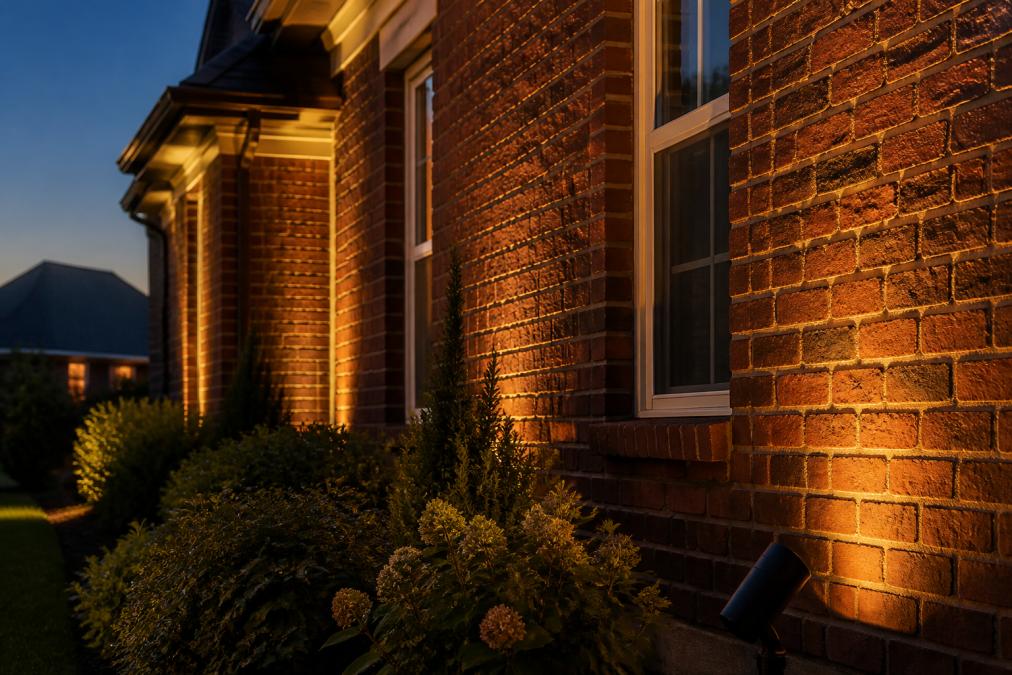
Uplighting for Texture Emphasis
Start with uplighting at ground level pointing upward along your facade. Use fixtures with a 24 to 40 degree beam angle to emphasize texture and create defined shadows. Warm color temperatures (2700K to 3000K) suit red and brown brick; cooler temperatures (4000K) work better on gray or tan brick.
Position uplights 18 to 36 inches from the wall base, spaced 8 to 12 feet apart horizontally for a two-story home. Test spacing before permanent installation, as daylight appearance differs from nighttime effect.
Accent Lighting for Architectural Features
Accent lighting highlights specific features like entryways or chimneys. Use fixtures with focused beams (12 to 24 degrees) delivering 50 to 100 foot-candles, positioned at 45-degree angles for maximum shadow definition.
For multi-story homes, ensure upper-level accent lighting doesn't create glare or light trespass. Use fixtures with barn doors or louvers to control light spill and avoid shining into adjacent windows.
Layering and Avoiding Uniform Washes
Avoid uniform facade washing, which looks harsh and erases texture. Instead, layer fixtures at different angles and intensities, some uplighting, some accenting focal points, some providing ambient illumination. This creates depth while respecting the material's character.
A typical layering approach includes base uplighting every 10 feet, accent lighting on two to three focal points, and softer ambient lighting near walkways. Use dimmers or smart controls to adjust the balance for different occasions.
Material-Specific Considerations
Brick color and mortar composition affect how light reads. Red brick with light mortar creates strong shadows; brown or tan brick reads softer. Weathered brick benefits from warmer light (2700K); new uniform brick handles cooler temperatures (3000K to 3500K).
Wide mortar joints (½ inch or more) benefit from brighter uplighting; narrow joints (⅜ inch) work better with softer light.
Fixture Selection and Installation
Choose fixtures rated for architectural applications with better beam control, higher CRI (90+), and precise color temperature options. LED fixtures should be rated IP65 or higher for moisture resistance in freeze-thaw climates.
Bury wiring at least 12 inches deep or use conduit for shallow burial. Use low-voltage (12V) systems with a properly sized transformer to avoid dimming and color accuracy loss.
Maintenance and Seasonal Adjustments
Clean fixtures and wash the facade annually, as dust and pollen reduce light reflection by 20 to 30 percent. Adjust uplighting angles seasonally to account for changing shadows from bare branches in winter.
Integrated LED Technology and Minimalist Fixture Design
Integrated LED technology eliminates visible bulbs and sockets, allowing minimalist fixture design with clean lines. However, this shift comes with trade-offs that matter for long-term ownership.
How Integrated LEDs Work
Integrated LED fixtures contain the light source, driver electronics, and heat management in a sealed unit. While LEDs last 50,000 to 100,000 hours, the driver typically fails after 10 to 15 years, requiring full fixture replacement.
This design enables minimalist aesthetics: fixtures disappear into the landscape while illuminating surfaces, creating sophistication and visual clarity.
The Minimalist Design Advantage
Minimalist design removes unnecessary elements and lets light become the focal point. A clean-lined fixture that blends into its environment during daylight creates surprise at night when it glows.
Contemporary architectural lighting trends favor fixtures that disappear during the day and define space at night. This approach works best in modern and contemporary styles; traditional homes may find minimalist fixtures feel cold.
The Integrated LED Trade-Off: Longevity vs. Replaceability
Integrated LEDs offer longer lifespan, better energy efficiency, superior color consistency, and seamless smart control. However, when they fail, you replace the entire fixture, not just the bulb.
Traditional fixtures cost $40-$150 with $10-$30 bulb replacements. Integrated LED fixtures cost $150-$600 upfront, with full replacement needed after 12 years. Over 30 years, integrated systems may cost more depending on fixture quality.
High-quality integrated LED fixtures with 10+ year warranties minimize replacement risk. Budget fixtures may fail sooner, increasing total cost of ownership. Discuss this with your lighting designer before committing.
Retrofit vs. New Build Reality
Integrated LED fixtures are engineered for new installations. Retrofitting existing homes often requires rewiring due to specific voltage and control protocol demands.
For existing systems, you can replace fixtures with integrated LEDs (expensive, requires rewiring) or upgrade to LED bulbs with smart controls (cheaper, less disruptive, reduces cost 40-60 percent).
For new construction, integrated LEDs make sense. For existing homes, a hybrid approach, integrated LEDs on focal points, upgraded traditional fixtures elsewhere, balances aesthetics, cost, and flexibility.
Smart Control Integration
Integrated LEDs enable smart controls seamlessly, with drivers communicating with smart hubs and responding to motion sensors without additional relays.
Smart control capability is only valuable if the fixture is reliable.
Maintenance and Longevity Expectations
Permanent Architectural Lighting Installation for Year-Round Impact
Permanent architectural lighting installation transforms your property's appearance every night of the year through engineered durability and consistent performance.
Sustainable Materials and Energy-Efficient Design
Sustainable architectural lighting trends prioritize LED technology, recycled materials, and low energy consumption. Modern fixtures are built to last decades rather than years. This longevity reduces waste and environmental impact.
Sculptural and Art-First Lighting as Focal Points
Sculptural lighting treats fixtures as art objects rather than purely functional elements. These pieces make statements. They command attention. They become conversation starters. This approach represents a major shift in architectural lighting trends away from invisible, purely utilitarian solutions.
Frequently Asked Questions
What are the most popular architectural lighting trends for 2026?
The dominant trends center on human-centric design, smart controls, and sustainability. Tunable white lighting that adapts to circadian rhythms, integrated LED technology with minimalist aesthetics, and sculptural fixtures that serve as art pieces are leading the market. Permanent architectural lighting installation continues to grow as homeowners recognize its impact on property value and year-round curb appeal. Biophilic design elements and organic geometry also reflect a shift toward fixtures that blend with natural environments rather than dominate them.
How can smart outdoor lighting control systems improve my property?
Smart outdoor lighting control systems let you adjust brightness, color temperature, and scheduling from your phone or voice commands. This means you can create different moods for entertaining, enhance security by automating lights when you're away, and reduce energy consumption by programming fixtures to turn off automatically. For restaurant patios, smart systems enable dynamic ambiance adjustments throughout the evening. Integration with home automation platforms makes these systems seamless to manage alongside other smart home features.
Is permanent architectural lighting installation worth the investment?
Yes. Permanent architectural lighting enhances curb appeal year-round, increases property visibility and security, and adds measurable value to residential and commercial properties. Unlike temporary solutions, permanent installations use durable low-voltage LED systems designed to last for years with minimal maintenance. They eliminate the seasonal installation and removal hassle while providing consistent, professionally designed illumination. For business owners, architectural lighting strengthens brand visibility and creates inviting outdoor spaces that encourage customer engagement.
Can architectural lighting look natural and subtle on my home?
Absolutely. Modern architectural lighting trends emphasize restraint and integration rather than dramatic showcasing. Accent lighting that highlights texture and architectural details, warm color temperatures that feel inviting rather than harsh, and fixtures designed with organic geometry and natural materials create a sophisticated, understated look. The key is layering different lighting types (ambient, accent, task) at appropriate brightness levels. Professional design ensures your lighting enhances your home's existing character rather than overwhelming it with obvious, artificial effects.