
10 Ways to Improve Home Security With Exterior Lighting
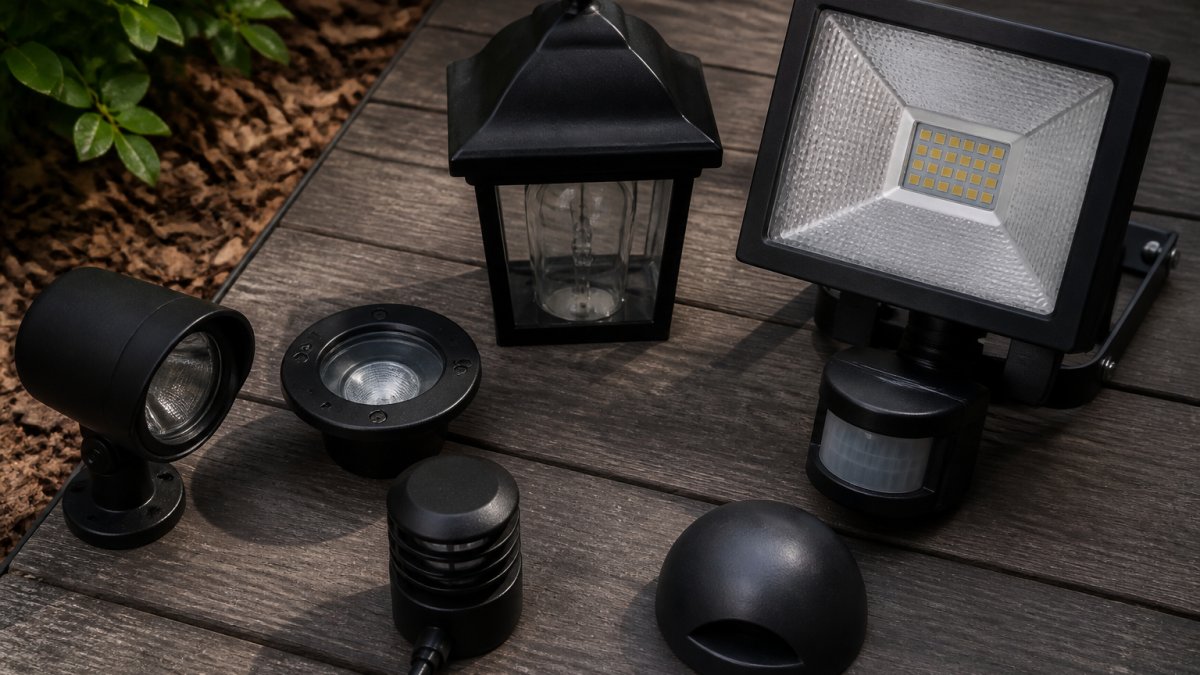
Table of Contents
- How Exterior Lighting Deters Intruders and Prowlers
- Motion-Activated Sensors vs. Dusk-to-Dawn Lighting: Which Works Best
- Best Color Temperature for Outdoor Security Lighting
- Strategic Placement of Fixtures Around Entry Points and Dark Corners
- Creating the Illusion of Occupancy With Automation and Timers
- Smart Home Lighting Integration for Seamless Security Control
- Safety, Visibility, and Fall Prevention on Pathways and Steps
- Integrating Exterior Lighting With Security Cameras and Monitoring
- Frequently Asked Questions
Last Updated: September 28, 2026
How Exterior Lighting Deters Intruders and Prowlers
The most effective home security strategy combines multiple layers of protection. Exterior lighting is one of the most underrated tools in that arsenal, and understanding 10 ways to improve home security with exterior lighting can transform your property's protection. Criminals avoid well-lit properties because they eliminate hiding spots and make them visible to neighbors and passersby.
Motion-activated sensors and floodlights create an immediate startle effect when someone approaches your home. An intruder wants anonymity and darkness. Bright light eliminates both. When a prowler sees that your property responds to movement with illumination, the risk calculation changes instantly.
Strategic lighting around entry points, dark corners, and pathways removes the advantage intruders depend on. Most break-ins happen at night precisely because darkness provides cover. By installing the right fixtures in the right locations, you transform your property from an easy target into one that requires too much exposure and effort.
At Paramount Outdoor Lighting Group, we specialize in transforming properties through expert outdoor lighting design and professional installation. Strategic illumination makes your home a harder target than the one next door.
Motion-Activated Sensors vs. Dusk-to-Dawn Lighting: Which Works Best
Motion-activated sensors turn lights on only when movement is detected. Dusk-to-dawn lighting stays on automatically from sunset to sunrise. Both work. Which one you choose depends on your priorities.
Motion sensors excel at energy efficiency and creating a startle effect. When an intruder triggers the light, the sudden brightness surprises them and signals that your property has active security. This psychological impact is powerful. Many prowlers will leave immediately rather than risk being seen.
Dusk-to-dawn fixtures provide constant visibility throughout the night. Your entry points, pathways, and dark corners stay illuminated continuously. This approach eliminates the brief window of darkness that a motion sensor creates between activation and light-on. For maximum security, many homeowners use both: motion sensors for high-traffic areas and dusk-to-dawn fixtures for permanent illumination of entry points.
The supporting keyword motion sensor vs dusk-to-dawn lighting highlights a real choice, but it's not either-or. Motion sensors work best on side yards and less-visible areas. Dusk-to-dawn fixtures work best on front porches, entry doors, and pathways where you want constant visibility. Layering both approaches creates redundancy, if one system fails, the other still provides coverage.
Energy consumption is a practical consideration. Modern LED fixtures consume far less power than older halogen or incandescent bulbs, so dusk-to-dawn systems cost less to run than they did a decade ago. Photocell sensors automatically detect dusk and dawn, eliminating the need for timers.
Best Color Temperature for Outdoor Security Lighting
Color temperature matters more than most homeowners realize. It affects both security effectiveness and how welcoming your home appears at night.
Warm white light (2700K-3000K) creates an inviting, residential feel. It's flattering to your home's exterior and doesn't feel harsh. However, warm light is less effective for security because it provides lower visibility and contrast. Intruders can move through warm-lit areas with less risk of being seen clearly.
Neutral white light (4000K-5000K) is the security sweet spot. It provides excellent visibility and contrast, making it easier to identify faces and details. Security cameras perform better under neutral white light. The illumination feels professional and clear without the harsh, institutional feel of cooler temperatures.
Cool white light (5500K-6500K) offers maximum visibility but can feel cold and unwelcoming. It's often used in commercial security settings but can make a residential home feel unwelcoming at night.
For the supporting keyword best color temperature for outdoor security lighting, the answer is neutral white. It balances security effectiveness with residential aesthetics. Most security professionals recommend 4000K-5000K for entry points and pathways where visibility matters most.
Your porch and entry door should use neutral white. Your landscape uplighting and accent lighting can use warmer tones for aesthetic appeal. This combination provides security where it matters while maintaining curb appeal.
Strategic Placement of Fixtures Around Entry Points and Dark Corners
Location determines effectiveness. The best fixture in the wrong spot wastes money and provides minimal security benefit.
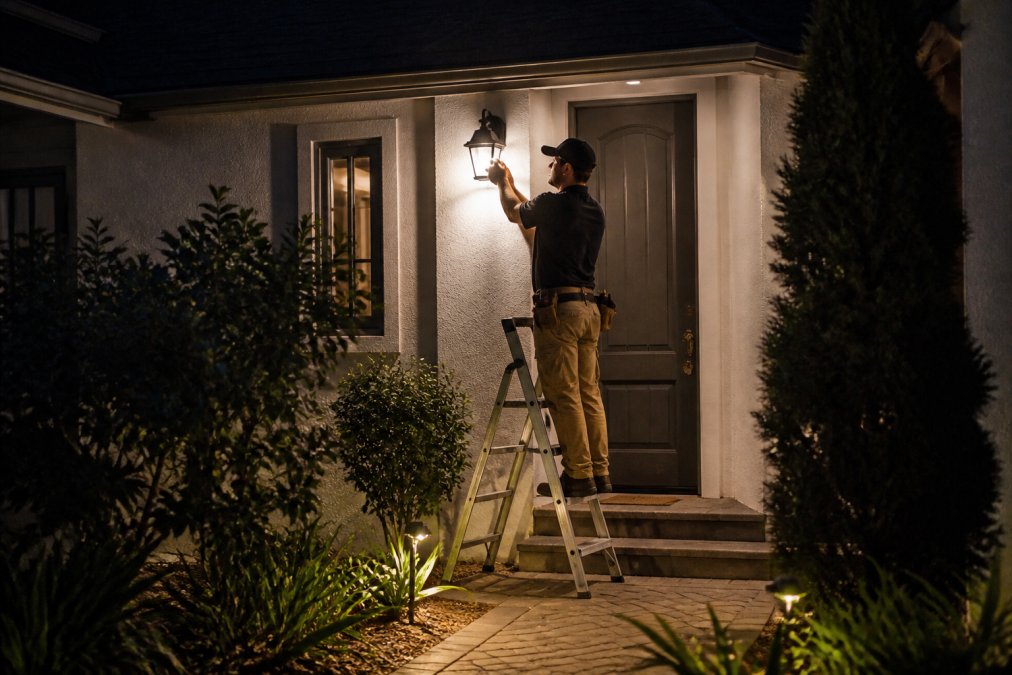
Entry points (front door, back door, garage entrance) need direct illumination. A floodlight or wall-mounted fixture should shine on the door itself, making it impossible for an intruder to pick a lock or force entry unobserved. Mount fixtures 8-10 feet high on the wall or soffit, high enough to illuminate a wide area but low enough to avoid glare in neighbors' windows. Beyond simple illumination, securing garage doors requires a combination of reinforced hardware and vigilant maintenance to ensure that these large entry points remain as impenetrable as your main entrance.
Dark corners are where intruders hide while casing your property. These are typically areas where landscaping creates shadows, where two walls meet, or where fences create enclosed spaces. Up-lighting from ground level eliminates these shadows. A fixture aimed upward at a corner shrub or fence line removes the hiding spot entirely.
Pathways and steps need low-level illumination for both security and safety. Path lights (12-18 inches high) create visibility without glare. They also prevent falls by clearly marking elevation changes. Space them 6-8 feet apart for consistent coverage.
Perimeter security requires fixtures around the entire property line. Back corners, side yards, and areas visible from neighboring properties should all have coverage. An intruder approaching from the side or rear expects darkness. When they encounter light, they move to an easier target.
The most common mistake is installing one bright light in the front and assuming the rest of the property is secure. Dark corners on the side and rear remain vulnerable. Comprehensive coverage means no zone is left unlit.
Creating the Illusion of Occupancy With Automation and Timers
An empty home is an obvious target. Lights that never turn on signal that nobody is home. Automation and timers create the illusion of occupancy, making your property look lived-in even when you're away.
Smart home automation allows you to control lights remotely from your phone. You can turn lights on and off at different times throughout the evening, mimicking the pattern of someone moving through the house. This is far more convincing than lights that stay on all night.
Random timers are more effective than predictable schedules. A light that turns on at 8 PM and off at 11 PM every night looks like automation. A light that turns on at 8:15 PM one night and 7:45 PM the next looks like someone is actually home.
Multiple zones increase the effect. If your front porch light comes on at 7 PM, your living room light at 7:30 PM, and your back patio light at 8 PM, the pattern suggests movement through the house. An intruder watching the property sees activity rather than an empty building.
Smart home lighting integration with your security system can even sync with your security cameras. When motion is detected on a camera, lights turn on automatically. This combines the startle effect with the appearance of occupancy.
For vacations or extended absences, set up randomized schedules across multiple zones. Vary the times each night. This creates a convincing illusion that someone is home managing the lights normally.
Smart Home Lighting Integration for Seamless Security Control
Modern security doesn't require multiple separate systems. Smart home integration connects your exterior lighting to your security ecosystem, creating a unified approach to property protection.
Voice control lets you manage lights without a phone or app. You can tell your smart home system to turn on all exterior lights instantly if you hear suspicious activity. This is faster than fumbling for a phone in an emergency.
Automation rules create smart responses. You can set your system to turn on all lights when motion is detected on any camera. You can program lights to turn on automatically at sunset and off at midnight. You can create scenes like "Away Mode" that randomizes all exterior lights to simulate occupancy.
Integration with security cameras means your lighting and monitoring work together.
Safety, Visibility, and Fall Prevention on Pathways and Steps
Security lighting serves double duty: it deters intruders and prevents falls. Pathways and steps are high-risk areas for both crime and accidents.
Integrating Exterior Lighting With Security Cameras and Monitoring
Exterior lighting and security cameras are most effective when they work together. Poor lighting creates poor camera footage. Good lighting creates clear, usable video.
Frequently Asked Questions
Does having outdoor lights on deter burglars?
Yes. Unauthorized intruders typically avoid well-lit properties because illumination eliminates hiding spots and increases their visibility. Motion-activated lights create a startle effect that further discourages approach. Studies show properties with exterior lighting experience fewer break-in attempts than those without. Combining consistent perimeter security lighting with motion sensors provides the strongest deterrent.
What is the best color temperature for outdoor security lighting?
Neutral white light (4000K-5000K) is often recommended for security as it provides excellent visibility and contrast, making it easier to identify details. Warm light (2700K-3000K) creates an inviting ambiance but offers less security visibility. For a balanced approach, neutral white can be used in high-risk zones like entry points and dark corners, while warmer tones can be used in landscaping for aesthetic appeal.
Should I use motion sensors or dusk-to-dawn lights for security?
Both serve different purposes. Dusk-to-dawn lighting provides constant illumination and creates occupancy simulation, while motion-activated sensors startle intruders and save energy. The most effective strategy combines both: dusk-to-dawn fixtures on main entry points and pathways for continuous visibility, plus motion sensors in dark corners and side yards for targeted detection.
Can I install exterior security lighting myself, or do I need a professional?
Low-voltage landscape lighting is often DIY-friendly, but security lighting for entry points, rooflines, and elevation changes requires proper installation to ensure durability and safety. Professional installation guarantees secure mounting, correct wiring, and optimal placement for maximum coverage.